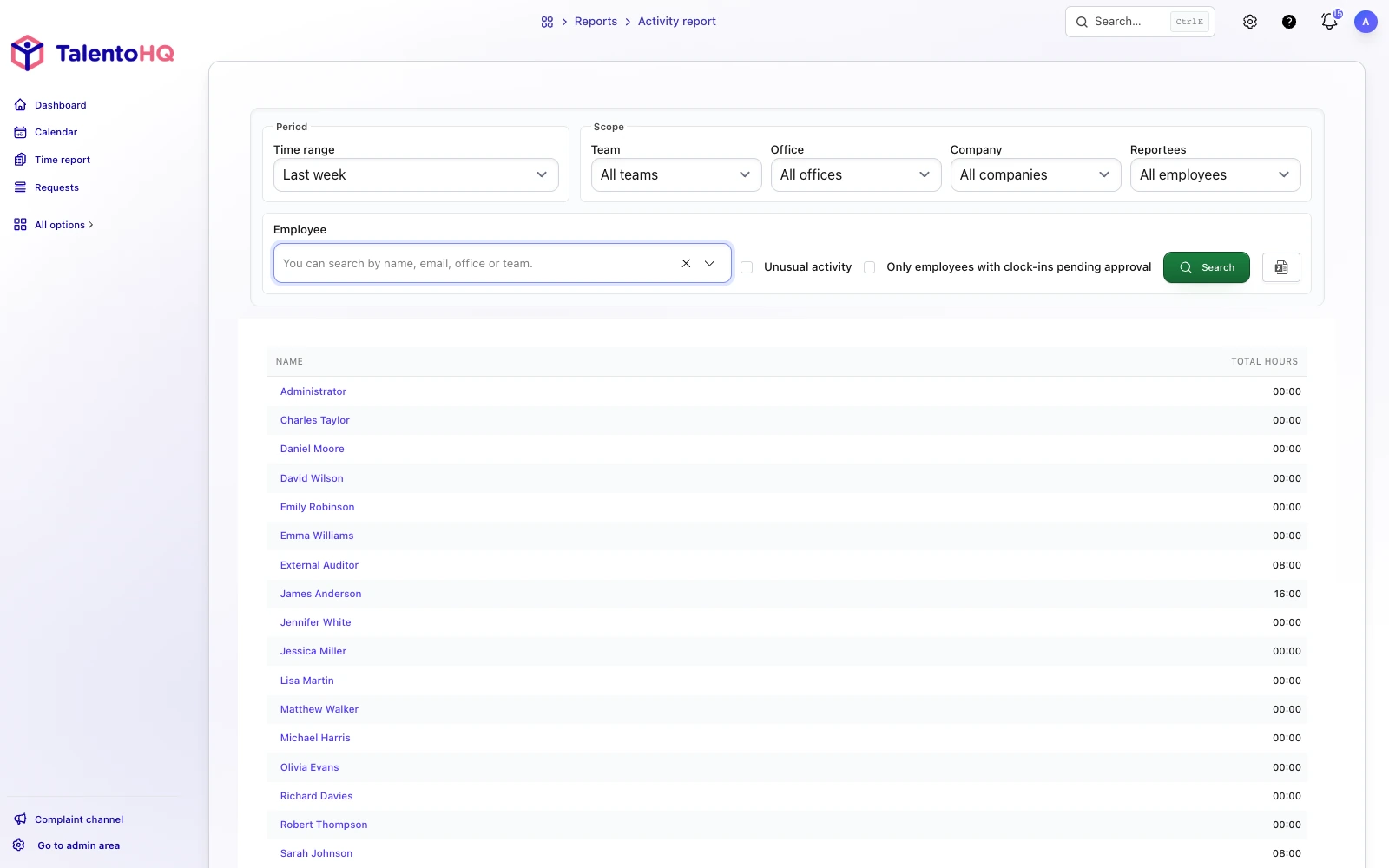
A restaurant can configure split schedules, rotating shifts and multiple locations. Employees clock in using the method enabled by the company, including RFID, while the manager who reviews the period checks starts, finishes and exceptions in a shared calendar.
Split schedules, shifts and multiple locations
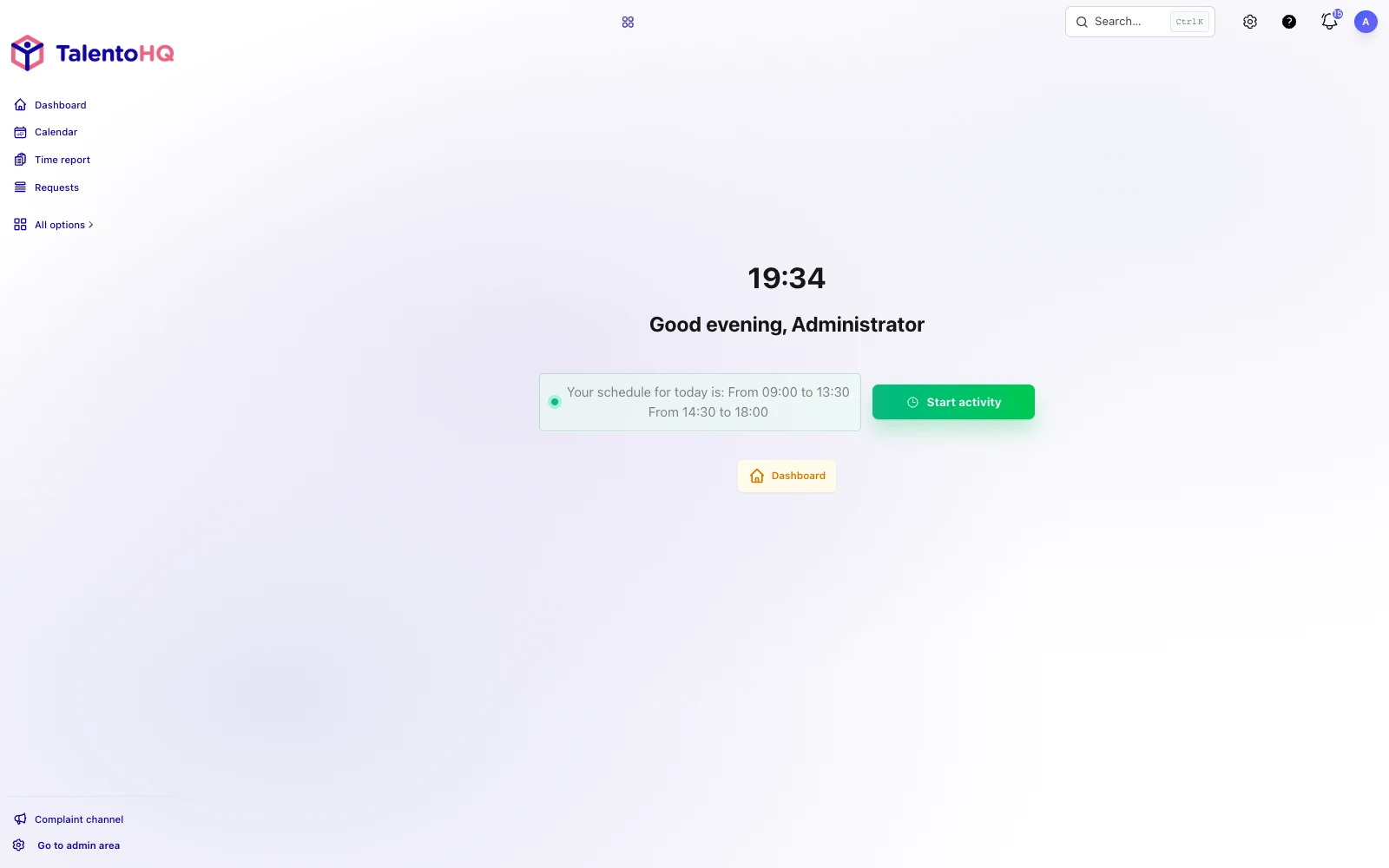
The company configures the schedules it uses and decides which clock-in method to enable at each location. TalentoHQ records the date and time, displays exceptions and retains the correction history so an authorized manager can review it.
If recorded time exceeds the configured schedule, TalentoHQ shows the difference for review. The company then decides whether it should be approved and how to compensate it under the applicable collective agreement and internal rules. The system retains the correction history.
RFID clock-ins during service
With RFID, an employee brings their card close to the reader and the system records the action without a code or touchscreen. Each card is assigned to one person; the company manages its issue and reviews any exceptions that occur.
The company can also enable clock-ins from a mobile device, the web or a shared tablet. Every method contributes to the same working-time record.
Shifts and absence in the same calendar
Calendar states distinguish confirmed, pending and unfilled shifts while also showing absence. This does not guarantee coverage, but it helps a manager notice that an assigned employee will be away and arrange a replacement earlier.
Natural-language queries and actions
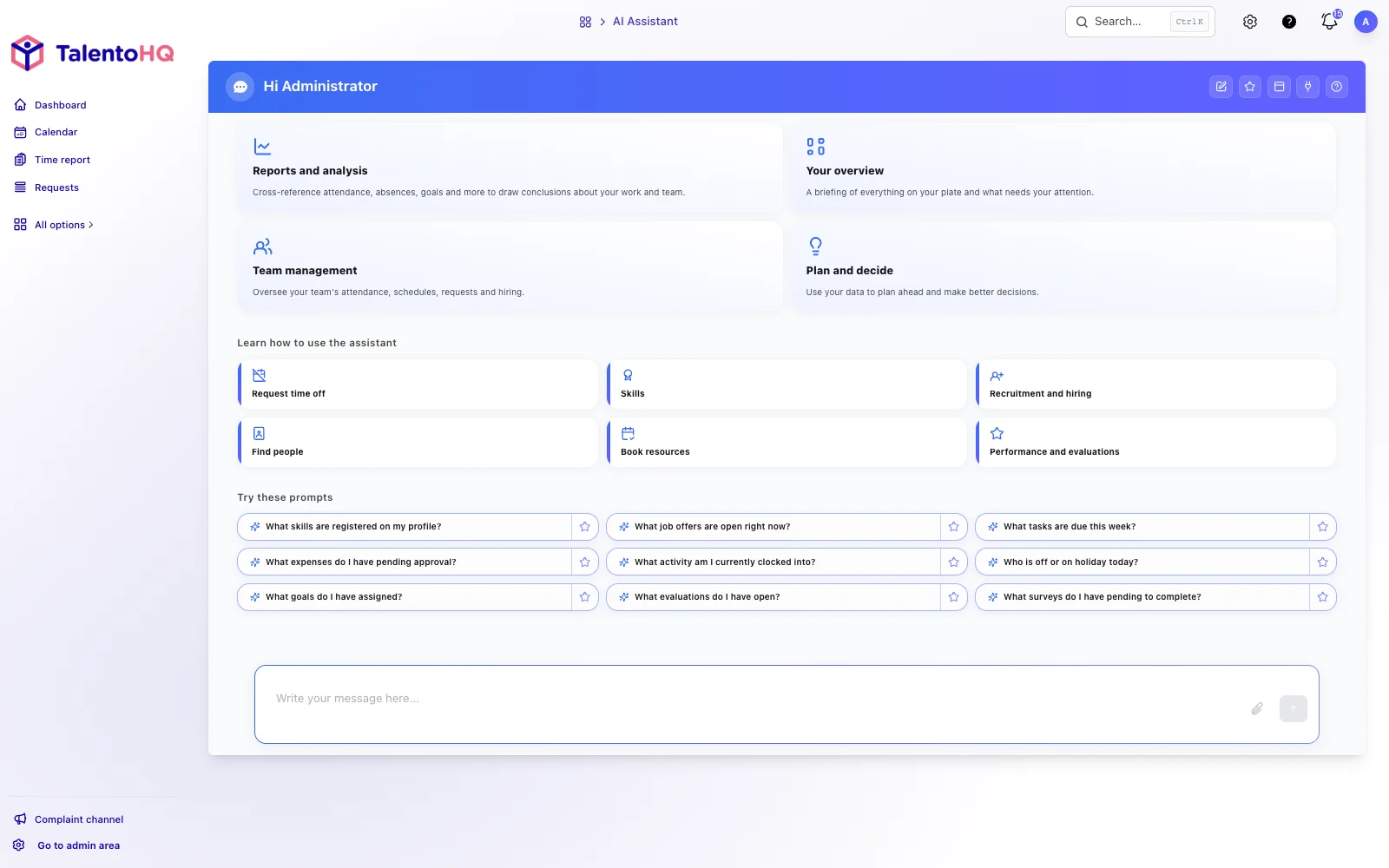
Employees can check their schedule or prepare a vacation request through the AI integration. Managers can access only the information allowed by their role, and each action is reviewed before it is saved or submitted.
One review before the next service
Before Saturday's service, a manager can check who is scheduled, who is absent and which Friday clock-ins still have an unresolved exception. That specific review explains the product's value more accurately than a promise to “transform” hospitality.