When someone leaves your company, the focus usually shifts to filling the position as quickly as possible. But there's a process that happens just before that, often improvised, which can cause serious problems if not handled carefully: offboarding.
A poorly managed departure can leave active access to critical systems after the person has left, misplaced documentation, clients unaware that their contact has changed, or key knowledge walking out the door without anyone capturing it. In an SME with 20 or 50 people, these situations have a direct impact on daily operations.
This guide explains what offboarding is, what a well-structured process should include, and how SMEs can manage it without adding unnecessary administrative burden.
What is offboarding and why it matters for your SME
Offboarding is the process that covers everything from the moment an exit is communicated until the formal and operational separation is complete. It includes more than end-of-contract paperwork: the return of equipment, revocation of digital access, transfer of knowledge the person accumulated, and any necessary internal and external communications.
Doing it well has concrete consequences. Companies that take care of how they manage departures maintain a better reputation as employers, avoid security risks, and preserve knowledge that would otherwise be lost. And in industries where everyone knows each other, how you treat someone when they leave says as much about your company as how you welcomed them when they arrived.
What an offboarding process should include
An effective offboarding doesn't require a large HR department. It requires a clear list of steps that are followed consistently every time someone leaves. These are the areas that can't be left uncovered:
Administrative and legal management
Labor regulations establish specific obligations when ending an employment relationship. Depending on the type of departure, the company must handle communication to the relevant authorities, settlement of wages and any prorated entitlements, the final pay statement covering all owed amounts, and the employment certificate required by Spanish authorities for unemployment benefits, if applicable.
These procedures have deadlines. Non-compliance can lead to claims from the employee or issues with labor inspections. Documenting the process with a checklist prevents any step from being missed, especially when the departure is unexpected or occurs during peak activity periods.
Equipment return and access revocation
This is where the most mistakes happen in SMEs: the employee leaves and weeks later someone discovers they still have access to corporate email, a management tool, or a shared folder in the cloud.
An offboarding protocol should include an inventory of what needs to be recovered -- computer, phone, access cards, keys -- and a list of systems and tools from which access needs to be revoked. The more systems your team uses, the more important it is to have this list documented and up to date. Access that nobody revoked isn't just an oversight; it's a real risk to the security of your company's and your clients' data.
Knowledge transfer
When someone has been in a role for a while, they accumulate information that isn't always documented: how they manage a particular client relationship, where certain files are stored, what the procedure is that nobody ever wrote down but everyone knew. When that person leaves without transferring that knowledge, the impact can be greater than anticipated.
A structured handover session -- with a handover document or a meeting with whoever will take on the responsibilities -- can make the difference between a departure that's barely noticeable in daily work and one that generates weeks of operational chaos. It doesn't need to be a lengthy process: with a well-guided conversation and a basic handover document, most of the critical knowledge gets captured.
Common mistakes in employee exit management at SMEs
Most offboarding problems don't come from bad intentions, but from a lack of process. These are the most common ones:
- Not having a documented list of steps. Every time someone leaves, the person in charge improvises from scratch. Something always gets forgotten.
- Revoking access too late. Waiting until the last day to remove access, or doing it days after the employee has already left, is a security risk that can easily be avoided with a little foresight.
- Neglecting internal communication. The team finds out about the departure through rumors. Clear and respectful communication with the rest of the staff maintains trust and avoids unnecessary uncertainty.
- Not conducting an exit interview. A brief conversation with the departing person, when done with sincerity and without defensiveness, is one of the most valuable sources of information a company can have about its own operations.
- Not updating the employee record. The departure documentation, signed agreements, and final settlement should be recorded and accessible, not scattered across the inbox of whoever was on duty.
How TalentoHQ simplifies offboarding management
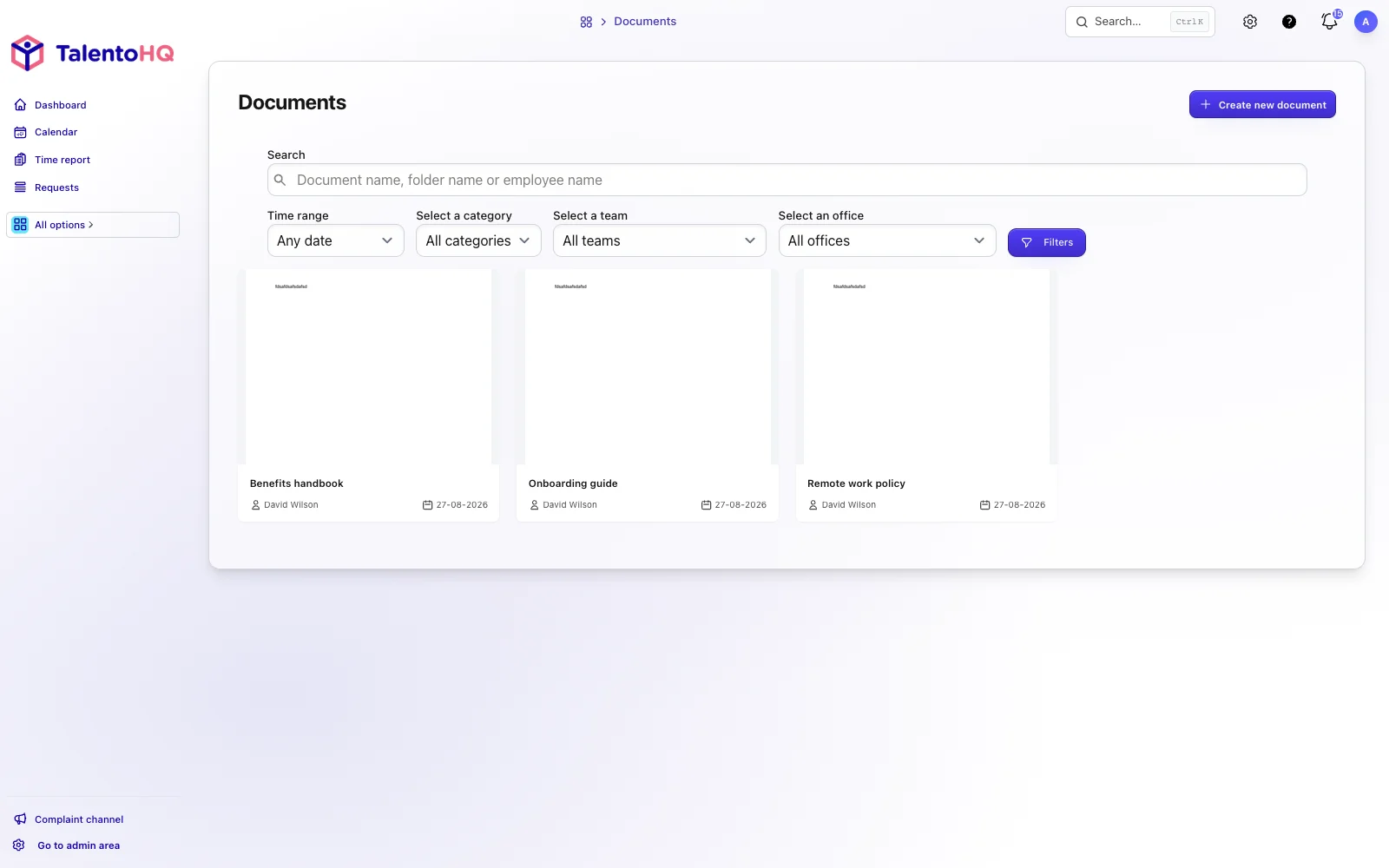
One of the advantages of centralizing employee information in an HR platform is that the departure process is managed from the same place where everything else is: the record, documents, time tracking logs, and certifications. You don't have to search for information across three different tools or reconstruct the history from scattered emails.
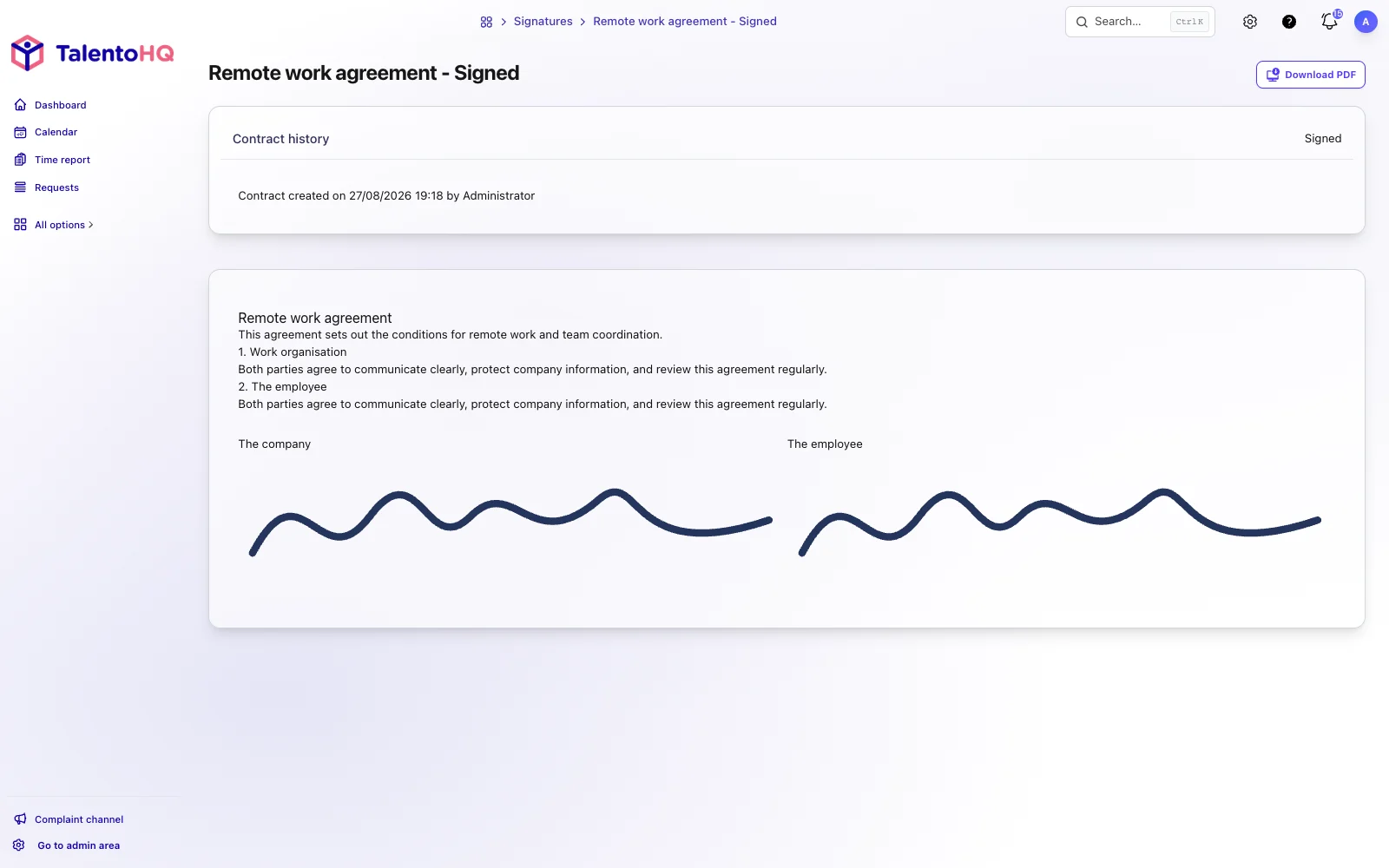
With TalentoHQ you can manage the complete employee lifecycle from onboarding to offboarding. The digital record centralizes all documents related to the departure, the electronic signature module allows you to process the final settlement quickly and with legal validity, and the skills and certifications history remains on record even after the employee has left the organization.
If you want to see how TalentoHQ can help you organize the departure process along with the rest of your HR management, you can book a demo.
Offboarding as part of the complete employee lifecycle
Onboarding and offboarding are the two ends of an employee's lifecycle in your company, and both deserve the same level of attention. A good onboarding process, like the one we described in this onboarding guide, helps new employees become productive sooner. A good exit process helps the company learn, protect itself, and maintain its reputation as an employer.
Structuring offboarding doesn't require significant resources. It requires documenting the steps, assigning clear responsibilities, and having the right tools so that nothing is left to improvisation. A well-made checklist and a centralized digital record are enough for most SMEs to manage departures in an orderly manner, respecting both the company's interests and the people who are leaving.
Offboarding FAQ
What should an employee offboarding checklist include?
Communication to the relevant authorities, settlement of wages and prorated entitlements, the final pay statement and, where it applies, the employment certificate; return of the computer, phone, access cards and keys; revocation of access to every system the person used; a handover document or meeting; internal and client communication; an exit interview; and an updated employee record with the signed departure documents.
What is the difference between onboarding and offboarding?
Onboarding covers a new employee's arrival until they become productive. Offboarding covers everything from the moment an exit is communicated until the formal and operational separation is complete. They are the two ends of the same employee lifecycle.