If your company still clocks in on paper or with an Excel spreadsheet, the new digital time tracking law for 2026 is aimed directly at you. The draft of the new Royal Decree, fast-tracked since September 2025, eliminates paper records and spreadsheets in one stroke. From now on, only digital systems will be valid.
But the change doesn't stop there. Fines are no longer per company -- they're now per affected worker, with penalties of up to 10,000 euros per person. For an SME with 50 employees, a serious violation could mean up to 375,000 euros.
In this article, we explain exactly what's changing, who it affects, what the new penalties are, what requirements your time tracking system must meet, and how to prepare without complications.

What changes with digital time tracking in 2026
Since 2019, Spain's Royal Decree-Law 8/2019 has required all companies to record their employees' working hours through Article 34.9 of the Workers' Statute. But that regulation allowed any format: paper, Excel, or digital -- everything was valid.
The new Royal Decree changes the rules completely. These are the most important changes:
| Aspect | Before (RDL 8/2019) | Now (new 2026 regulation) |
|---|---|---|
| Record format | Paper, Excel, or digital | Digital only -- paper and Excel are prohibited |
| Type of penalty | Per company (collective) | Per worker (individualized) |
| Fine amounts | Up to 6,250 EUR per serious violation | Up to 7,500 EUR per worker (serious) and 10,000 EUR per worker (very serious) |
| Technical requirements | Not specified | Individual credentials, immutable records, digital timestamp, remote access for inspectors |
| Inspection access | On-site, after a visit | Remote and in real time |
| Biometrics | Not specifically regulated | Excluded by Spain's AEPD (data protection authority) (Article 9 of GDPR) |
Current status of the law: the Council of Ministers approved the fast-track process on September 30, 2025, and the public consultation period opened on October 9. As of March 2026, the regulation has not yet been published in the Official Gazette (BOE), but everything points to it coming into force this year. Important: this regulation is separate from the reduction of the working week to 37.5 hours, which was rejected in Congress in September 2025.
Who it affects: all companies, no exceptions
The new regulation makes no distinction between industries or sizes. It affects:
- All private companies, from a single employee to large corporations
- Public sector entities
- Self-employed individuals with employees
- All types of contracts: permanent, temporary, part-time, remote, or on-site
There are no differentiated grace periods by size. Both a micro-business with 3 employees and a company with 200 need a compliant digital system. The difference lies in the complexity of the solution, not in the obligation.
The penalties: now per worker
This is the most impactful change. Under the current regulation, an inspection can penalize the company with a single fine. Under the new law, each worker without a proper record is a separate violation.
The amounts according to the LISOS (Spain's Law on Employment Violations and Penalties):
- Minor violation (formal errors, occasional disorganization): up to 1,000 EUR
- Serious violation (total absence of records, invalid system, failure to keep data for 4 years): from 1,001 to 7,500 EUR per worker
- Very serious violation (falsification of records, obstruction of inspectors): up to 10,000 EUR per worker
Let's do the math: a company with 20 workers facing a serious violation could be looking at a fine of up to 150,000 euros. And in case of repeated very serious violations, the inspection authority can publish the company's name.
Another significant change: the Labor Inspection will have remote, real-time access to records. It's no longer about having paperwork ready for when the inspector arrives. The system has to be running, with data accessible at any time.

What your time tracking system needs to comply
The new regulation defines specific technical requirements. Your digital time tracking system must meet all of these points:
- Individual credentials: each worker clocks in with their own PIN, QR code, RFID card, or mobile NFC. No shared clock-ins.
- Minute-level precision: exact recording of the start, end, and breaks of each shift.
- Immutable and traceable records: entries cannot be deleted or modified. Corrections generate a new linked entry with a trail of who made it, when, and why.
- Digital timestamp: each clock-in must carry a verifiable time stamp.
- Remote access: the Labor Inspection and worker representatives must be able to consult the data in real time.
- 4-year retention: records must be stored with guaranteed integrity for four years.
- Overtime logging: overtime must be recorded along with its compensation, including the worker's electronic signature.
About biometrics: if your company uses fingerprint readers or facial recognition for clocking in, pay attention. The Spanish Data Protection Agency (AEPD) has ruled that biometric systems are not valid for time tracking, based on Article 9 of the GDPR. The reason: in an employment relationship, employee consent is not considered truly voluntary (since the employer holds power). This will force many companies to change their system.
How to adapt without complications
You don't need to wait for the regulation to be published in the Official Gazette to start preparing. In fact, the sooner you start, the better: adapting takes time and the direction is clear.
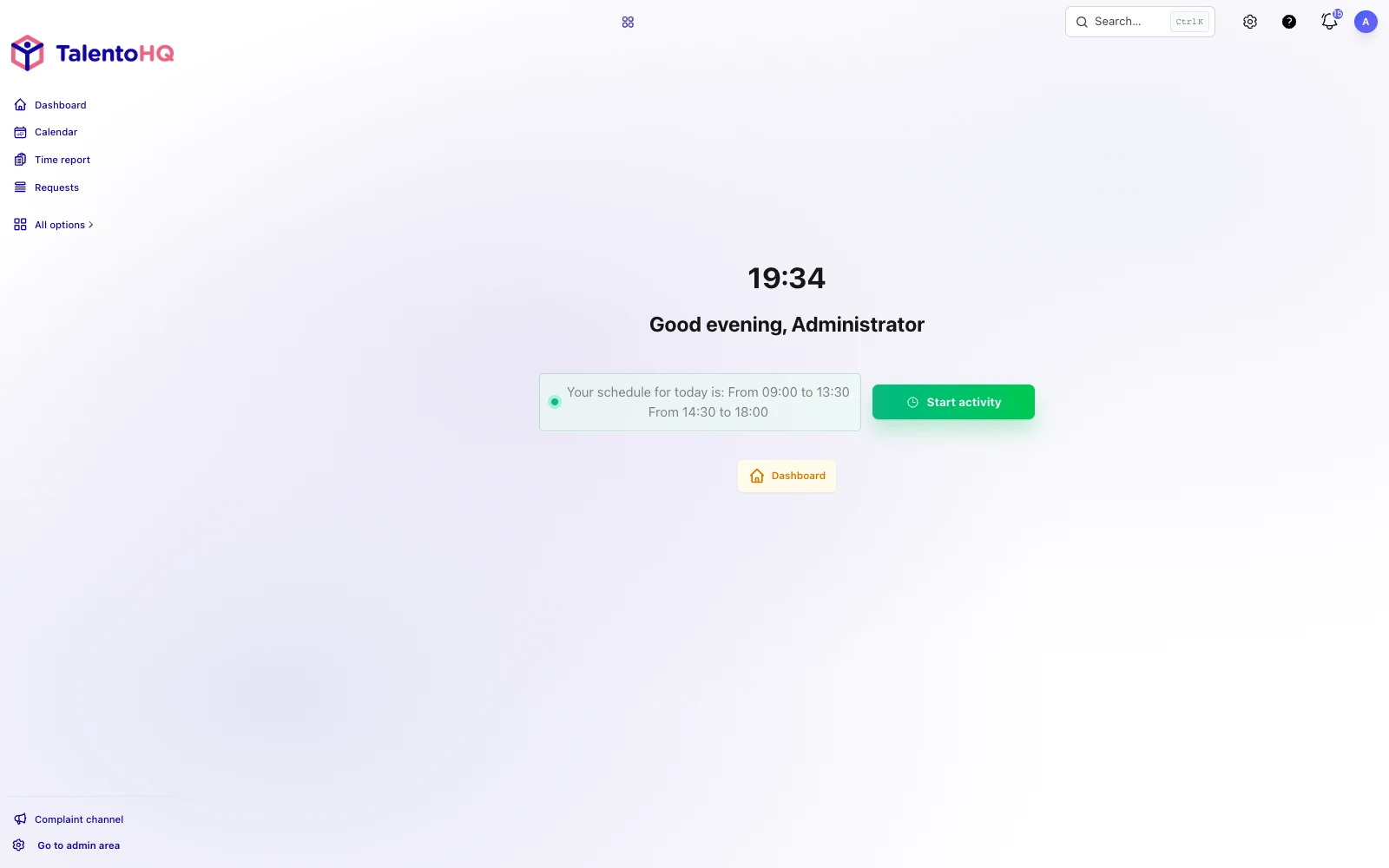
To make this process easier, TalentoHQ offers a digital time tracking system that complies with all the requirements of the new regulation from day one:
- Digital clock-in with geolocation: each employee clocks in from their phone with individual credentials. No additional hardware, no complicated installations. You know who's clocking in, when, and from where.
- Immutable and traceable records: all clock-ins are digitally sealed. Corrections generate a complete history that meets immutability requirements.
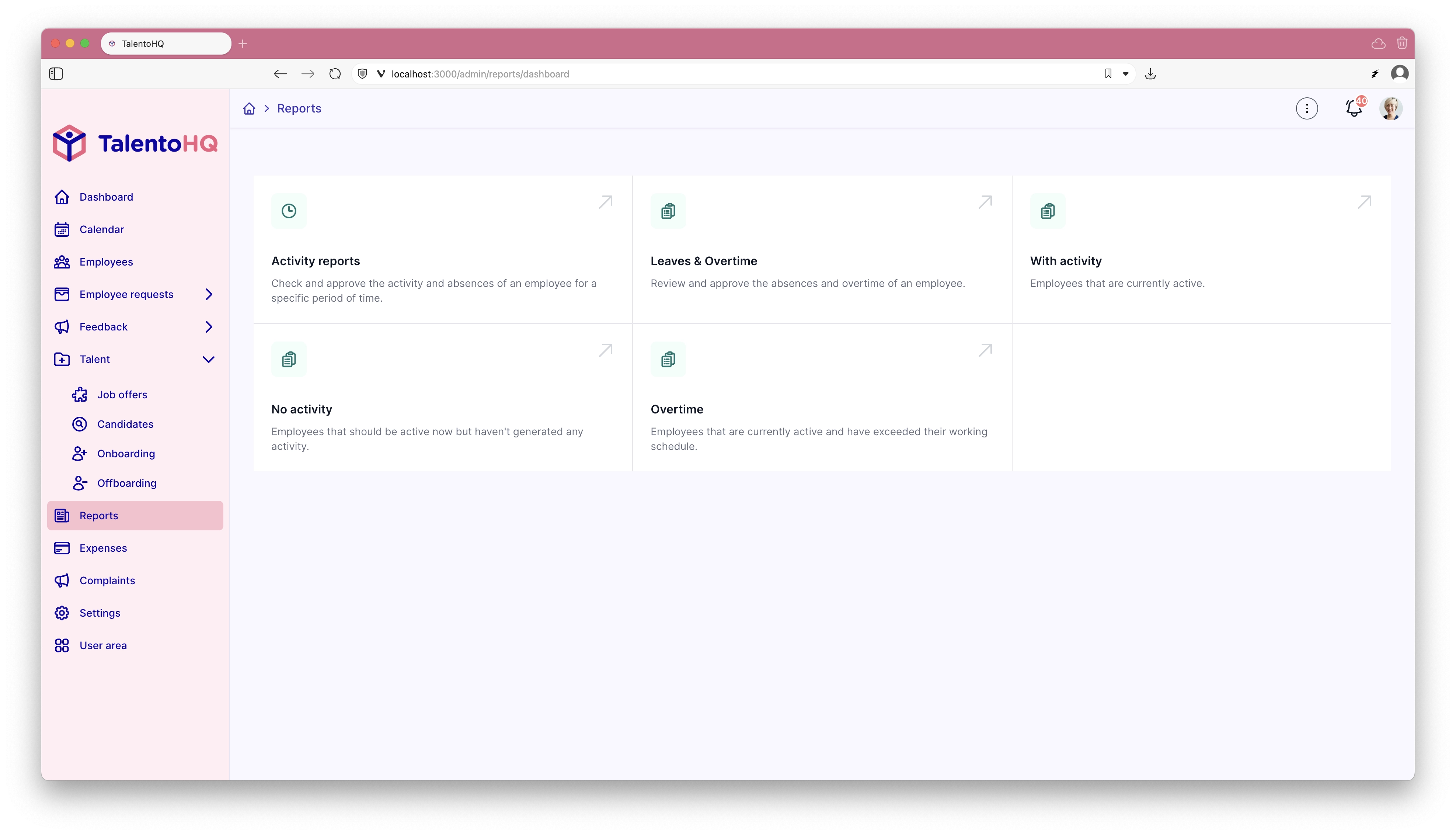
- Automatic reports ready for inspection: export records from the last 4 years with a click. Hours worked, overtime, absences -- all calculated automatically and ready to present.
- Integrated absence management: vacations, leaves, and sick days are directly integrated with time tracking, providing a complete view of each employee's attendance. Discover how absence management works.
- Access for employees and representatives: each worker can check their own records at any time from the app, complying with the right of access required by law.

If you already have a paper or Excel-based time tracking system, the transition is easier than you think. TalentoHQ can be set up in minutes and your team can start clocking in the same day. You can check our complete time tracking guide for SMEs for a step-by-step walkthrough, or review the deadline for adapting to digital time tracking for more regulatory context.
Prepare now, not when it's urgent
The new digital time tracking law for 2026 brings deep changes: digital-only format, per-worker penalties, and remote access for inspectors. Although the exact enforcement date depends on publication in the Official Gazette, the direction is clear and companies that prepare now will avoid the last-minute stress.
The TalentoHQ Time Tracking plan includes digital time tracking compliant with the new regulation for 1 EUR/employee/month. Clock-in with geolocation, automatic reports, and everything your company needs to comply without complications.
We invite you to try TalentoHQ for free for 30 days to comply with current and future labor regulations, or request a personalized demo.