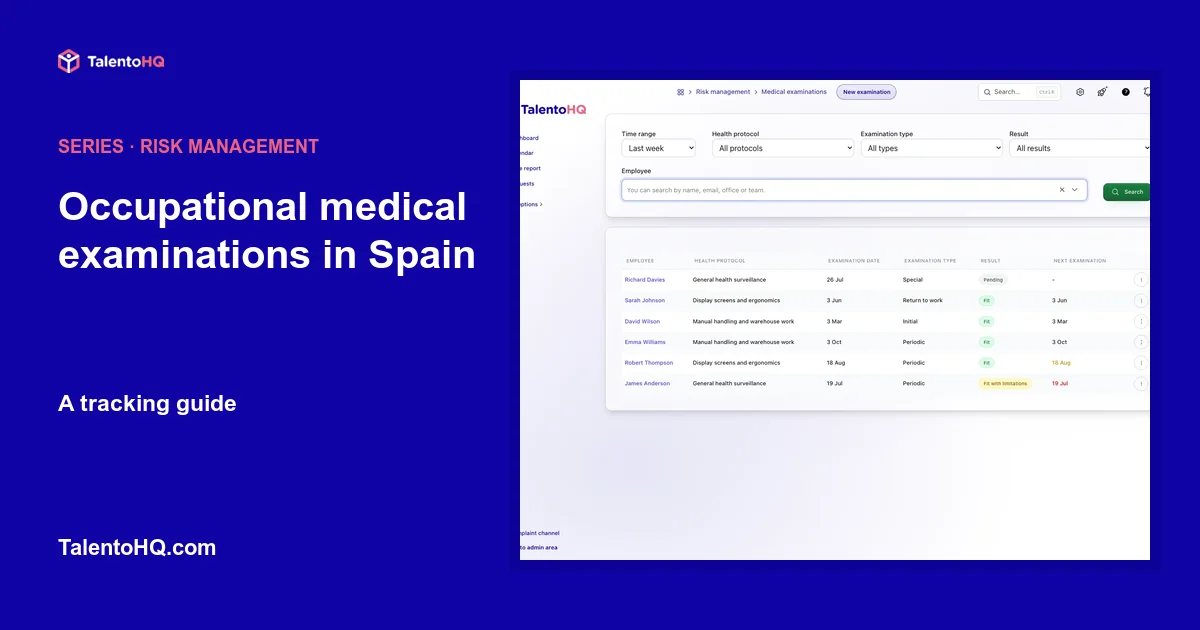
Occupational medical examinations need follow-up, but the information requires especially careful handling. A company needs to know the prevention-related fitness conclusion and upcoming dates. It does not need full diagnoses or medical records in its HR tools.
Protocols, prevention-related results, and reviews need administrative controls that minimize data and restrict access. TalentoHQ organizes that follow-up without turning the platform into a clinical record system.
Health surveillance and occupational medical examinations
Article 22 of Spain's Law on Occupational Risk Prevention regulates periodic health surveillance based on the risks inherent in the work. As a general rule, it requires consent, subject to the exceptions and safeguards established by the law.
Surveillance must be specific to the risks and respect privacy, dignity, and confidentiality. Access to personal medical information is limited to healthcare professionals and health authorities. The company and people with prevention responsibilities receive the necessary conclusions about fitness for work or the need for measures.
The Spanish Data Protection Agency (AEPD) provides guidance on data protection and health surveillance. Before defining fields, attachments, or access, review the legal basis, the prevention service's role, and the organization's internal procedures.
What administrative follow-up needs to answer
Administrative follow-up should answer operational questions safely without reconstructing a medical consultation:
- Which protocol applies to the position or identified risks?
- When did the last examination take place?
- Was it initial, periodic, special, or a return-to-work examination?
- What prevention-related conclusion was communicated to the company?
- Is there a scheduled next date?
- Who can view or change the record?
- Which document, if any, is authorized for retention here?
Clear answers reduce emails containing sensitive data, parallel lists, and uncontrolled downloaded attachments. They also help HR and occupational risk prevention work from the same date without unnecessarily expanding the content.
Define health protocols before recording dates
A health protocol describes the surveillance appropriate to specific risks or positions. It should come from the company's prevention organization, not from an improvised administrative label.
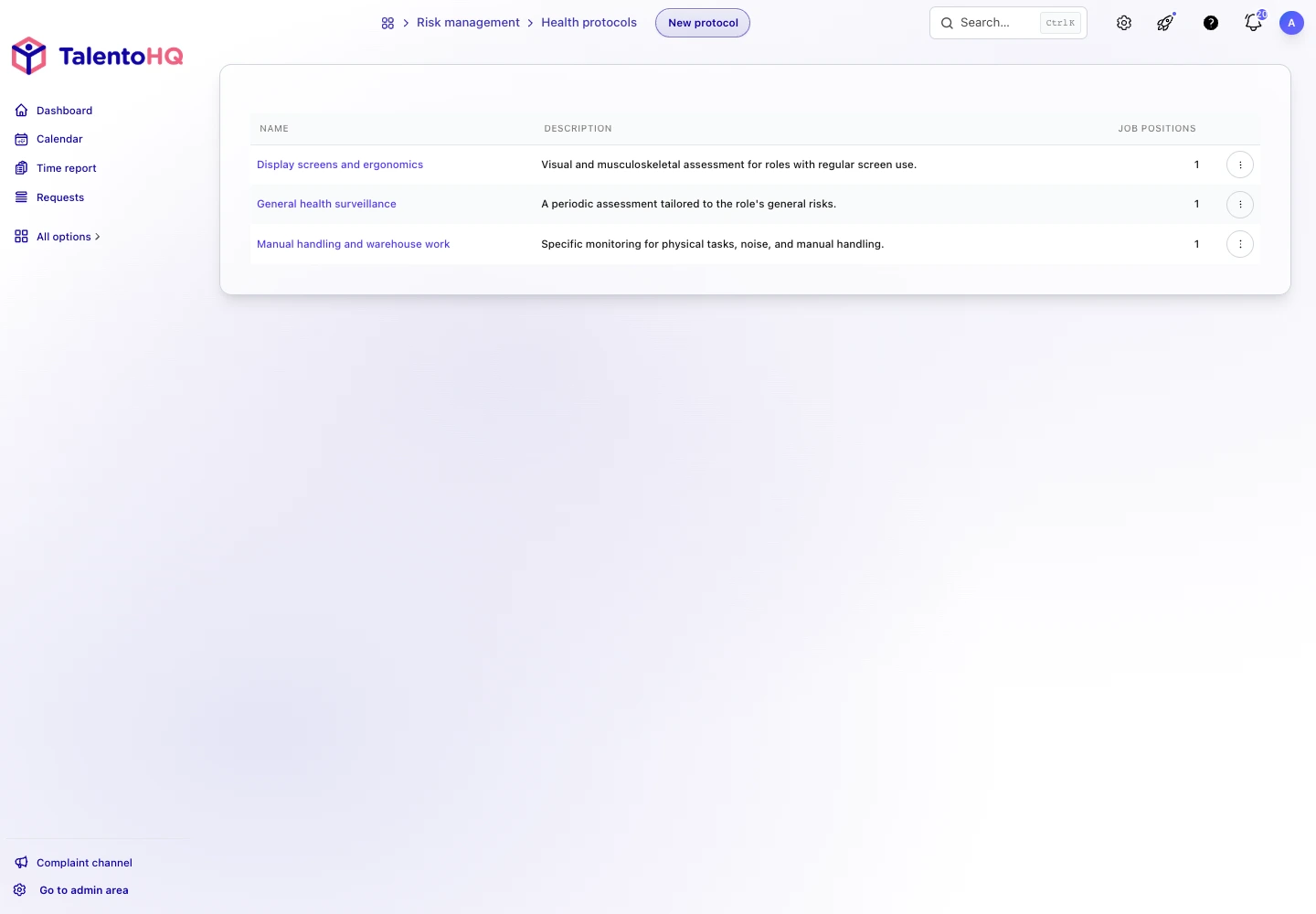
In TalentoHQ, protocols have a name and description. The record shows related positions, although the connection is configured from the position. Any existing protocol can be selected when an examination is recorded.
Not every record must have a protocol, but consistent names improve filters and reviews. “Display screens and ergonomics” communicates the purpose better than “Protocol 2.”
Record an examination without expanding the data
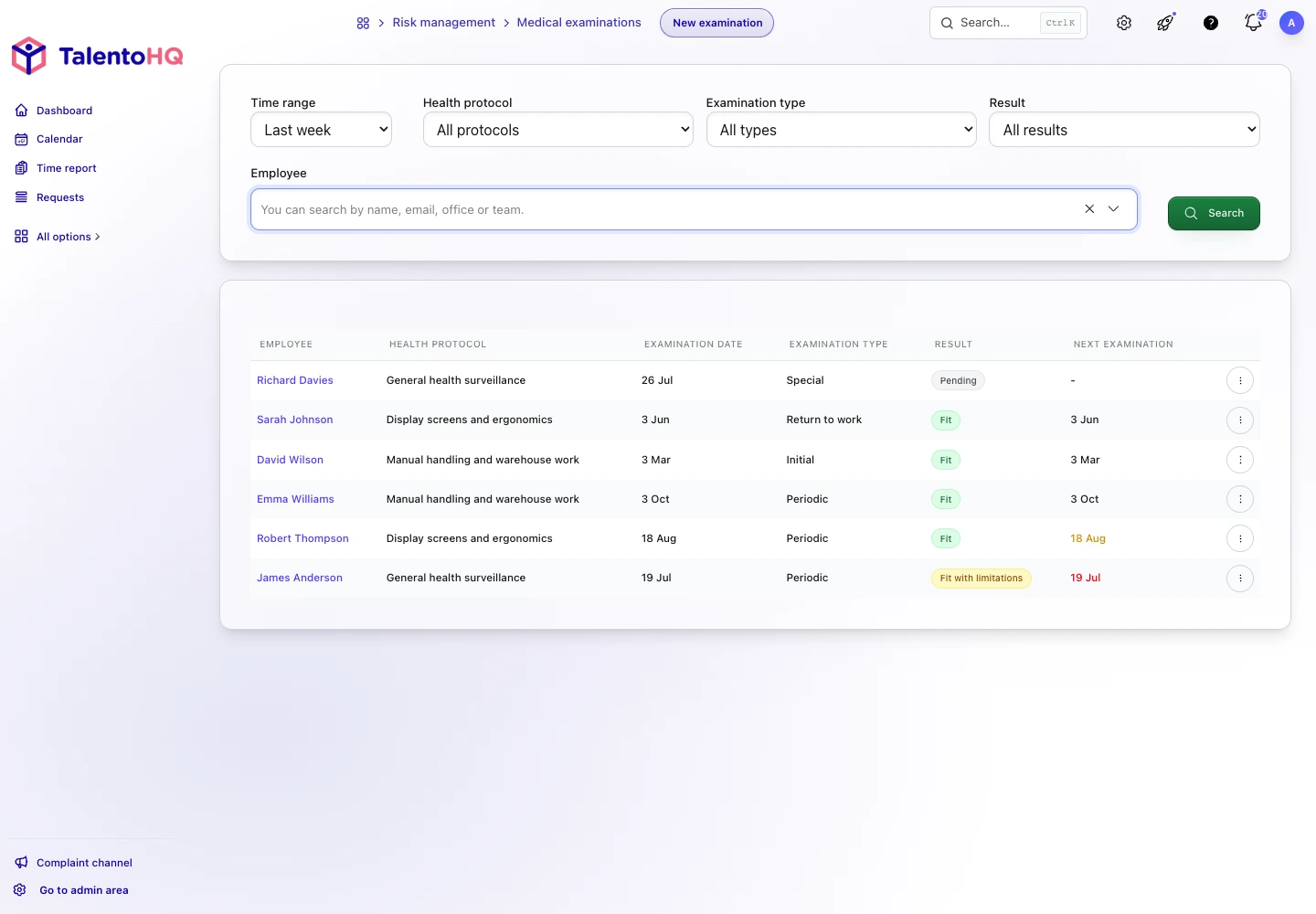
The TalentoHQ record lets an authorized user select the person, associate the protocol, and enter the examination date and type. The available types are initial, periodic, return to work, and special.
The result is recorded as pending, fit, fit with restrictions, or unfit. The record can also include the provider, medical center, strictly necessary notes, the next date, and authorized files.
The date of the next examination is optional. When entered, it must be later than the examination date. The system uses that date to show four situations:
- Not scheduled. There is no next date.
- Overdue. The date is today or earlier.
- Coming up. The date falls within the next 30 days.
- Scheduled. The date is more than 30 days away.
This classification organizes follow-up; it does not interpret the person's health. The result and date answer different questions and must remain separate.
To see how protocols, results, and upcoming dates can be filtered, you can request a personalized demo with no commitment.
Data minimization as a practical rule
A notes field does not make everything that could be written there necessary. Before adding information, ask whether the company needs it to manage prevention and whether this system is an authorized place to retain it.
As an operating rule:
- Do not copy diagnoses or detailed clinical results.
- Do not attach complete medical records.
- Avoid subjective notes about the person.
- Record the communicated prevention-related conclusion and restrictions in the authorized terms.
- Restrict permissions and review who retains access.
- Define retention and deletion under the applicable policy.
Avoid routine exports as well. Downloading a spreadsheet to work “faster” creates another copy that may fall outside access, update, or deletion controls.
A routine for overdue and upcoming dates
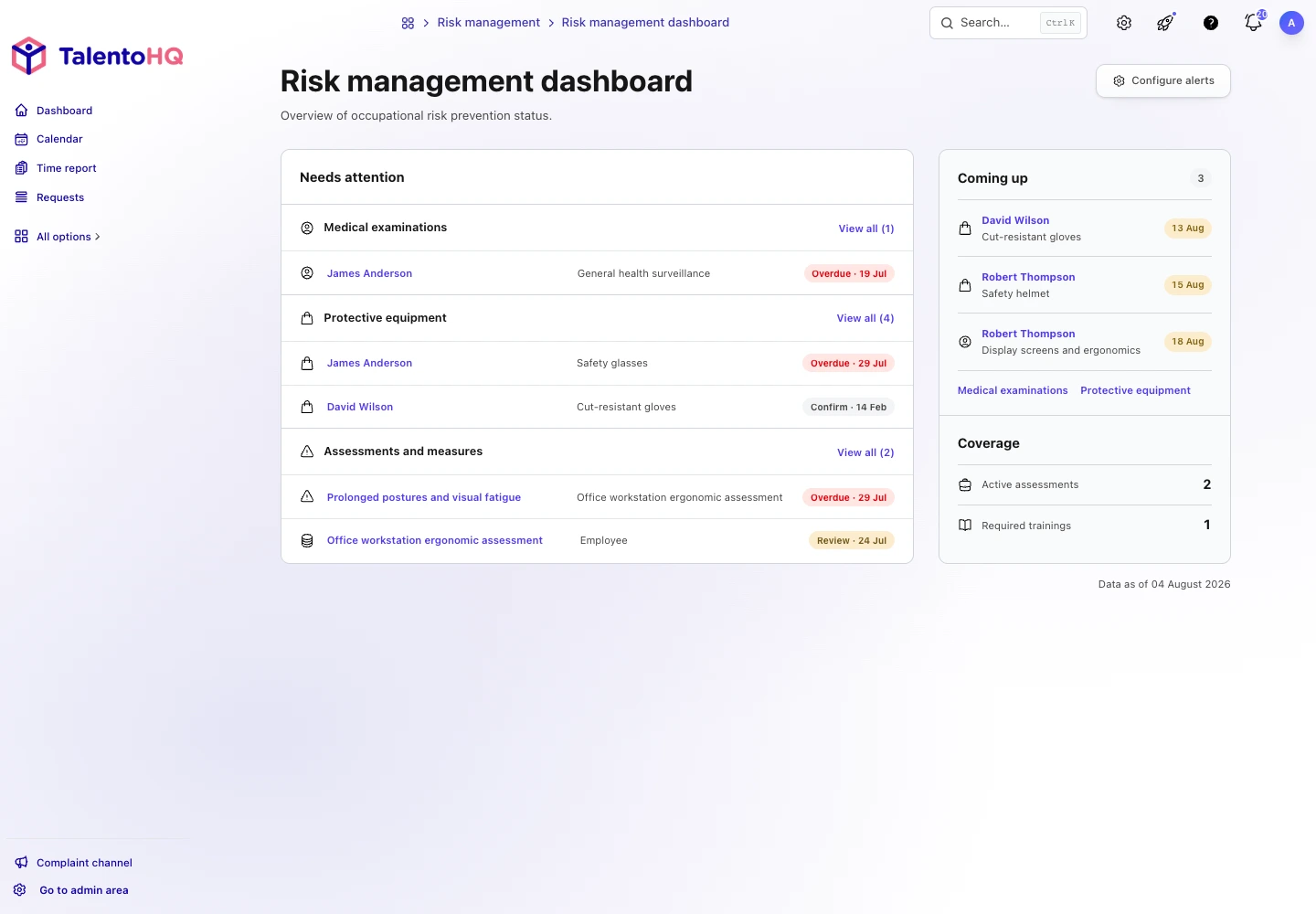
The TalentoHQ dashboard includes examinations whose next date is today or has passed under Needs attention. Coming up includes examinations due within the next 30 days.
An orderly review can follow these steps:
- Open the record and check that the date matches the agreed follow-up.
- Use the authorized channel to confirm whether an appointment or action already exists.
- Update the record only when valid new information is available.
- Avoid medical details in coordination emails or comments.
- Check that the protocol and access scope remain correct.
The settings screen can save a preferred lead time for examinations, but that value does not currently change the dashboard's fixed 30-day window or send emails or notifications on its own. The guide to occupational risk alerts explains this distinction.
Common mistakes in medical examination follow-up
- Using a shared spreadsheet without restricting access. Easy access does not justify allowing more people to view health data.
- Confusing fitness for work with diagnosis. The company receives prevention-related conclusions, not the medical record.
- Recording a next date without a source. The calendar should reflect agreed follow-up, not an arbitrary estimate.
- Storing the same file in several places. Copies make access, version, and retention harder to control.
- Deleting a protocol without reviewing relationships. In TalentoHQ, deletion removes its association with positions and examinations. The records remain, but the protocol field is blank.
- Treating the dashboard as a medical calendar. It is an administrative follow-up tool, not a clinical system.
How this connects with the rest of prevention
Protocols and examinations are one part of the cycle. Risk assessments help determine needs, measures can change a position, and those changes can require a review of protocols, training, or equipment.
The main occupational risk management guide for Spanish SMEs shows how to connect these records without mixing their purposes. The goal is to follow the path with appropriate access and responsibilities, not to gather all information in one record.
A procedure for creation, review, and closure
Record quality improves when every examination follows the same administrative procedure. Before creating it, confirm the person, protocol, and channel through which the conclusion arrived. Then record the date, type, result, and next review without adding clinical content.
A second authorized person can review a sample to find dates earlier than the examination, incorrect protocols, or unnecessary attachments. When someone leaves the company, the record should not be deleted automatically. Retention and access must follow the applicable policy and data-protection analysis.
Corrections should also be documented. If a next date changes, the update should rely on valid information. The system should reflect real follow-up, not a calendar reconstructed from assumptions.
When several offices or teams share administration, filters can prepare the review without exporting all records. Results can be narrowed by person, protocol, type, result, or date range. The coordinator should work only within the authorized scope and share conclusions through approved channels.
A common incident begins when a document arrives by email and remains in the inbox, a folder, and the system. The procedure should define one source of reference, remove temporary copies when possible, and prevent sensitive information from remaining indefinitely in personal downloads.
Frequently asked questions about occupational medical examinations
Is a next date required?
Not in TalentoHQ. It can remain blank when no date is scheduled. The record then appears as not scheduled and is not included among upcoming due dates.
Can HR see the diagnosis?
Spanish law limits personal medical information to healthcare professionals and health authorities. The company receives the necessary conclusions about fitness and measures. Design the procedure with appropriate data-protection and professional advice.
What does “fit with restrictions” mean?
It is a prevention-related conclusion communicated by the appropriate service. The company should interpret and apply the restrictions through the established channel without trying to infer a diagnosis from the label.
Can an examination record be deleted?
The interface supports record management, but any deletion must respect documentation, retention, and data-protection obligations. Deletion must not be used to hide an overdue date or replace a correction that requires an audit trail.
Who should have permission?
Only people who need to manage this information as part of their responsibilities. TalentoHQ restricts lists to the authorized scope, but the company should review groups, responsibilities, and access regularly.
Conclusion: retain less information and review it better
Occupational medical examinations need reliable dates, understandable protocols, and a strict separation between prevention-related conclusions and clinical information.
TalentoHQ highlights upcoming reviews and keeps the record within its authorized scope. A periodic review should check three things: whether each data point remains necessary, whether access remains justified, and whether the next action has a defined channel.