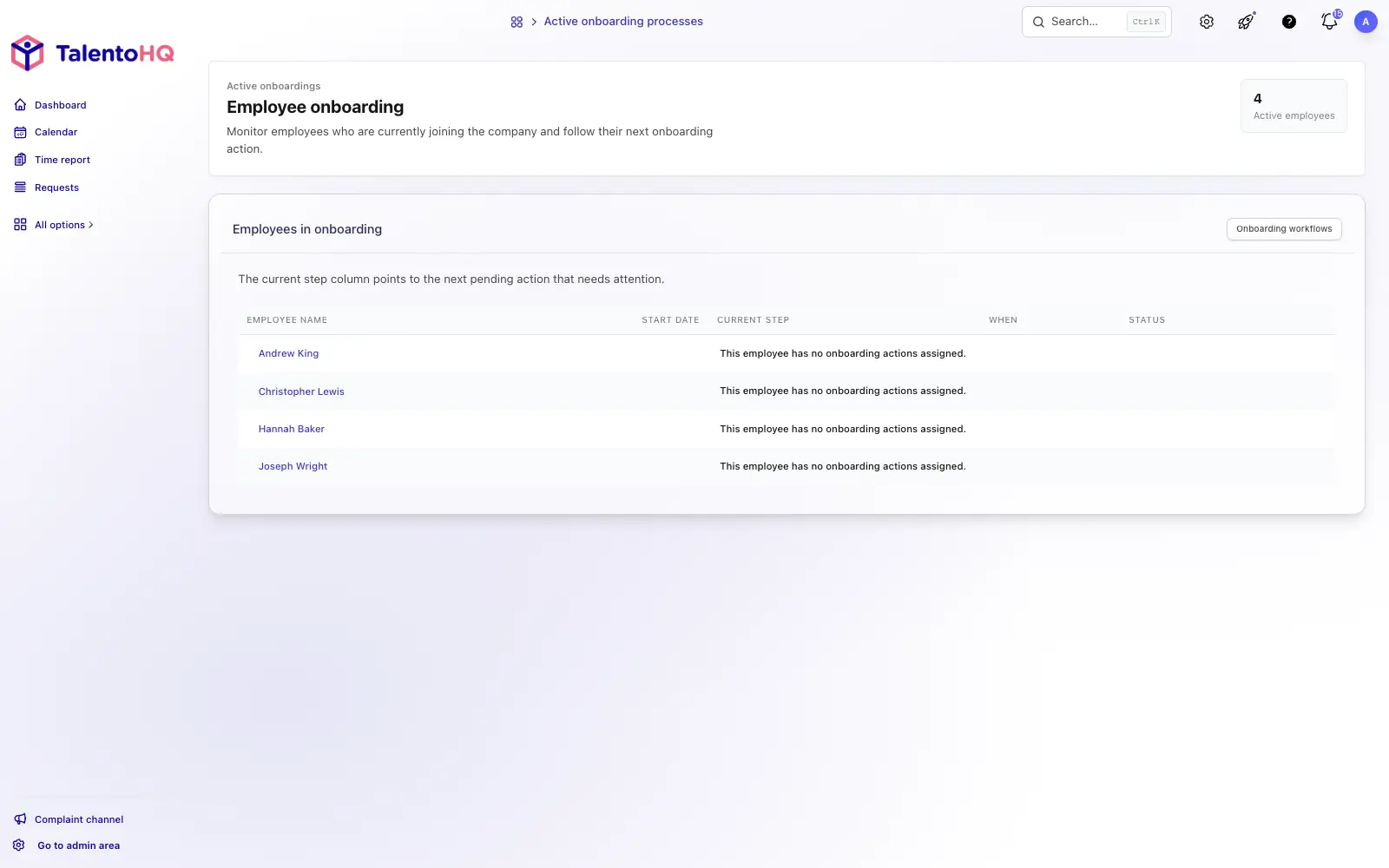
Many early resignations begin taking shape in the first few weeks, while a new employee is still deciding whether joining was the right choice. In many SMEs, that period relies on good intentions but little structure: a welcome email, a morning with the manager, and several documents that still need signatures.
A modest, well-designed onboarding process reduces improvisation, helps the employee understand the role sooner, and shows from the first day that the company takes both its operations and its people seriously.
This guide covers why the first 30 days matter, four practical stages, a 90-day checklist, common problems in companies with 20 to 200 employees, and where HR software can help.
Why onboarding is such a valuable stage of employment
The cost of an unsuccessful hire includes more than the salary paid. It includes management time, recruitment work, training, pressure on the rest of the team, and the opportunity cost while the role becomes vacant again.
Against that cost, a prepared onboarding is relatively light. A few hours from HR, the manager, and participating colleagues can reduce repeated questions and make expectations clearer.
For employers operating in Spain, the initial period also concentrates obligations that cannot be improvised: Social Security registration before work begins, contract formalization and communication under the applicable rules, job-appropriate occupational-risk training, and information about required internal procedures. The company must confirm the exact obligations for the role and workplace; a checklist or platform does not provide that legal determination.
The four stages of SME onboarding
A company with 20 to 200 people does not need an elaborate program. It needs clear objectives, named owners, and materials prepared for four stages.
Before day one: preboarding
The period between signing and starting is ideal for completing administration and reducing first-day friction. Prepare the contract and relevant appendices for signature, complete required registrations, share the welcome material, request equipment or uniforms, and arrange system access.
A short personal message from the direct manager can make a material difference. Include the first week's outline and the name of the person who will welcome the new employee. It removes uncertainty without overwhelming them before they start.
The first week: orientation and context
Full productivity is not the first week's objective. By the end of it, the new employee should understand what the company does, how the team is organized, who can answer different questions, what the role requires, and where essential information lives.
Spread the program across several days: team introductions, a tour of the operation and workplace, initial occupational-risk training, the policies that affect working time, vacation, expenses, or communication, and guided use of work tools.
Finish the week with a short manager conversation. It does not need to be a formal assessment. Review questions, expectations, and obstacles before they accumulate.
The first month: progressive independence
From the second week, the employee can take on real work with increasing independence. Write down the objectives for the probationary period and the criteria that will be used to review them.
“Fit in well” or “get up to speed” is not enough unless translated into observable behavior, work, or learning. Add role-specific training, weekly 20- or 30-minute check-ins, and a peer contact where helpful. The peer does not replace the manager; they provide a convenient route for everyday questions.
The next three months: full integration
After the first month, review whether expectations are being met from both the company's and the employee's perspective. Conversations at 30, 60, and 90 days, using a shared outline, reduce dependence on each manager's personal style.
These meetings also reveal problems in the onboarding itself. Record what arrived too late, which explanation was missing, and which tasks were unnecessary so the next hire receives a better process.
An onboarding checklist for the first 90 days
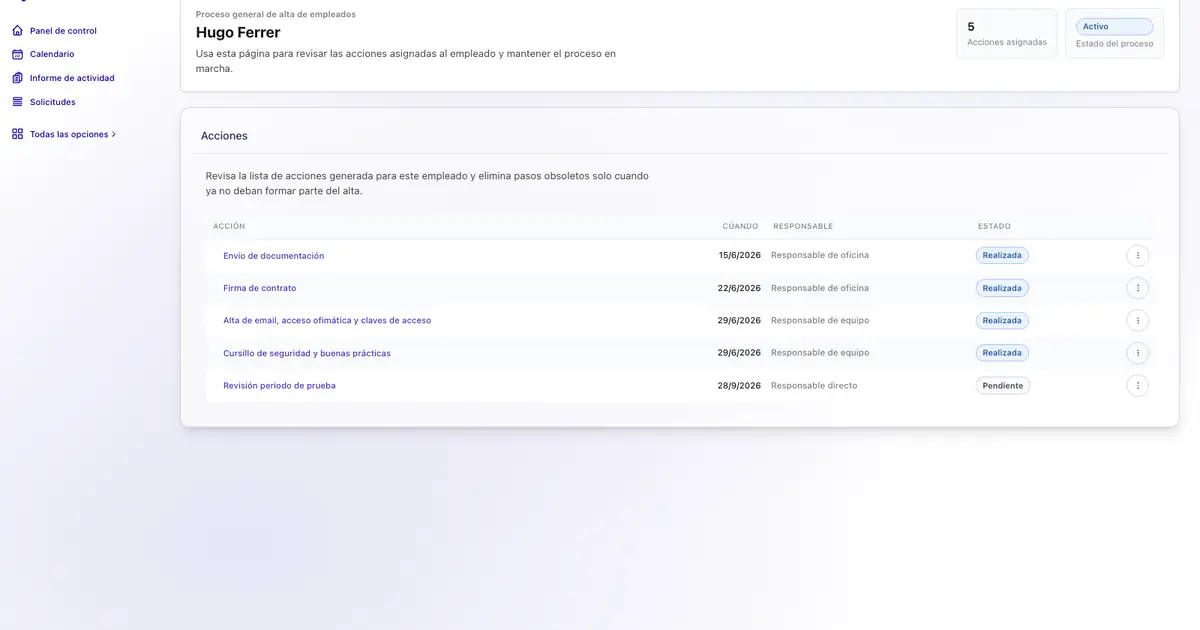
- Preboarding: contract and appendices prepared, Social Security steps handled, equipment requested, access created, first-week schedule sent, and welcome documents available.
- First day: welcome arranged, team introduced, role explained, equipment delivered, essential tools reviewed, and time reserved for immediate questions.
- First week: initial risk-prevention training completed, internal policies explained, key meetings scheduled, first tasks guided, and closing conversation held with the manager.
- First month: probation objectives documented, technical training assigned, weekly check-ins completed, and independence, workload, and expectations reviewed.
- First quarter: 30-, 60-, and 90-day reviews completed, two-way feedback documented, any relevant continuity decision handled correctly, and process improvements recorded.
Common mistakes in companies with 20 to 200 employees
- Putting everything on day one. A full day of introductions, access, documents, and training creates overload rather than clarity.
- Skipping preboarding. Waiting until the start date to request equipment or prepare documents wastes the first days.
- Leaving the process without an owner. Every task needs an owner and a due date.
- Improvising documentation. Searching for contracts or policies while the employee waits undermines confidence and consumes support time.
- Not defining probation objectives. An unwritten standard leaves the final decision in a gray area for both parties.
- Forgetting people outside the office. Warehouse, factory, workshop, delivery, cleaning, field, and client-site roles deserve onboarding adapted to their real work.
- Stopping after one month. Without scheduled follow-up, managers may assume everything is fine until trust has already been lost.
Where HR software fits
Software is useful when it centralizes the checklist, documents, signatures, training, and follow-up. The goal is not digitalization for its own sake; it is to prevent parallel files, scattered email, and tasks that depend on one person's memory.
TalentoHQ combines employee management, onboarding and offboarding, and training to support:
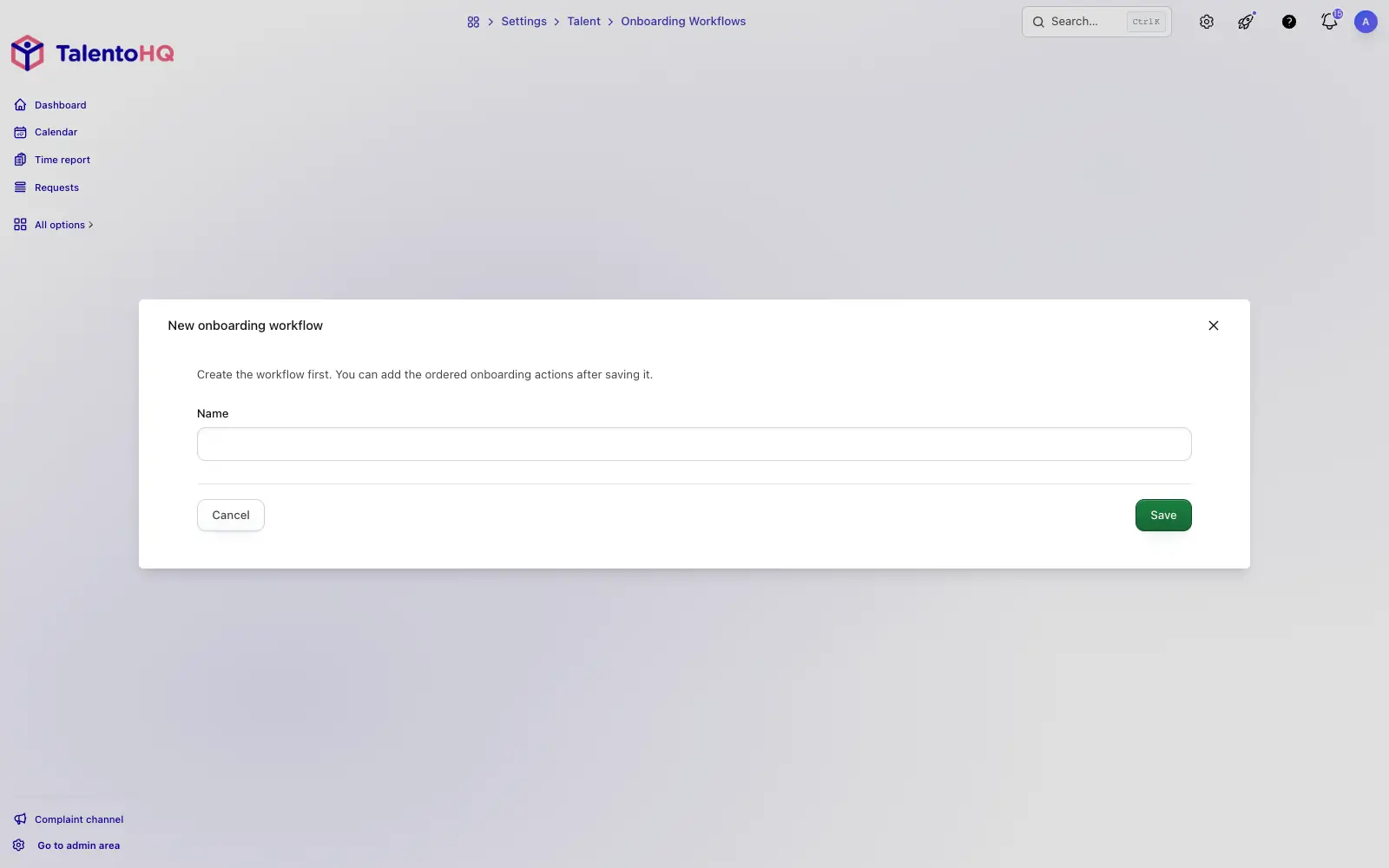
- Process templates: reusable preboarding, first-week, first-month, and first-quarter tasks assigned to responsible people.
- Electronic signatures: contracts, appendices, equipment policies, and other documents can move through a traceable signature process.
- Employee portal: employees can reach the documents and basic information made available to them without searching old email.
- Required training: role and policy learning can be assigned and followed in one place.
- Follow-up meetings: shared 30-, 60-, and 90-day templates help managers apply a consistent structure.
The platform coordinates tasks and evidence. It does not decide whether a hire, contract, training course, or probation decision complies with the rules applicable to the employer.
Conclusion
Onboarding is not a courtesy added after hiring. It is the period in which a company demonstrates how it works. Prepare administration before day one, spread context across the first week, define observable objectives for the first month, and keep structured conversations through day 90.
A checklist creates consistency, but a thoughtful manager still needs to listen, adjust the pace, and respond to the new employee's real experience.