Your collective agreement already sets a 38-hour week, an employee says Spain's statutory maximum will become 37.5 hours “any day now,” and a manager wants to know whether shifts must be recalculated. The first task is to separate enacted rules from a proposal that did not pass.
This article is for English-speaking employers operating in Spain, not employers applying US law. The status of the 37.5-hour bill is stated as of July 10, 2026, the review date of the approved Spanish source. Verify later developments and the collective agreement before acting.
The proposal to reduce Spain's general statutory maximum from 40 to 37.5 hours a week was rejected by Congress in 2025. The government indicated that it intended to return to the subject, but an intention or new draft is not an enacted obligation. This guide explains what applies under the source's review date and how to model possible scenarios without announcing a change that has not become law.
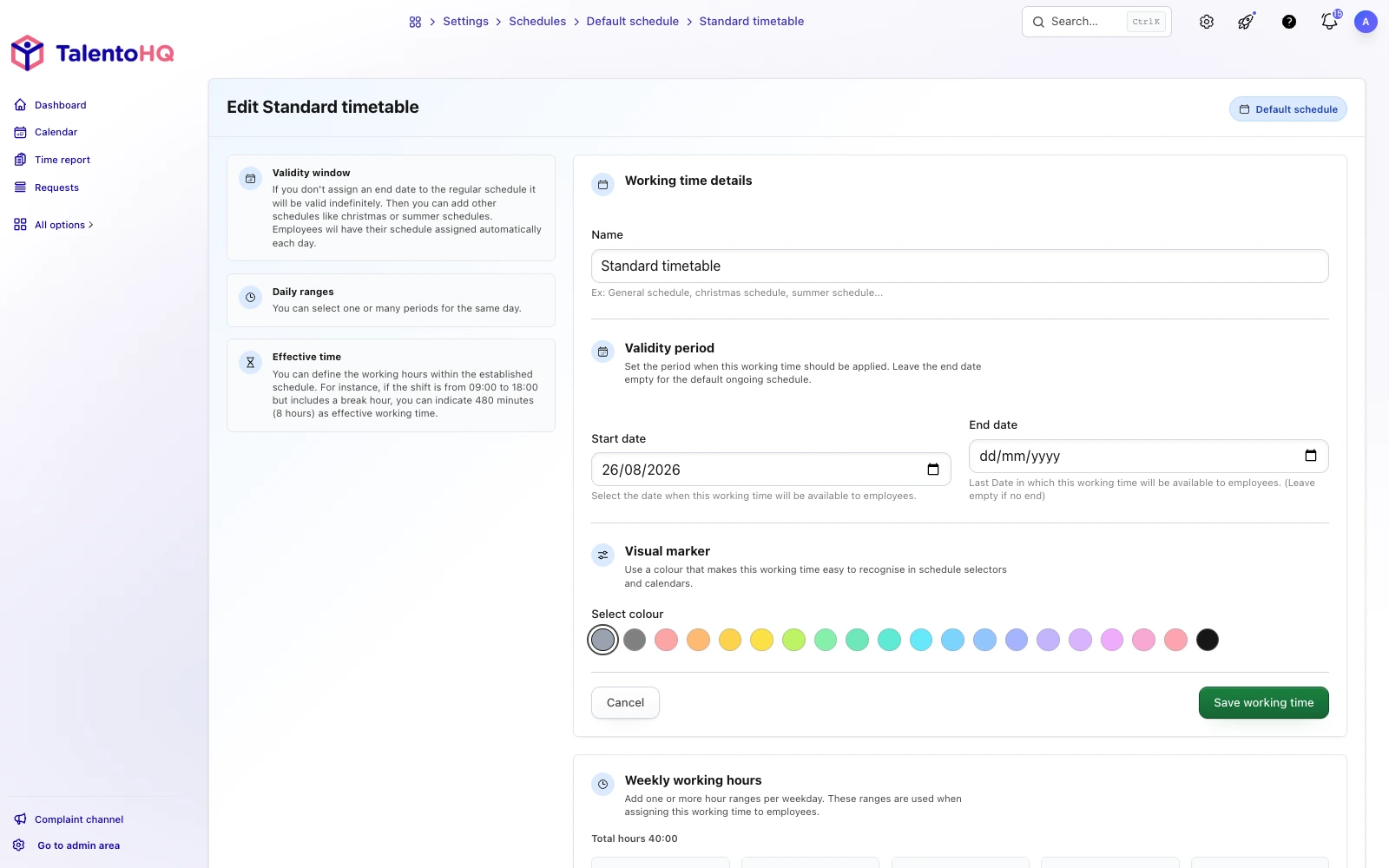
What happened to the proposed 37.5-hour week
In February 2025, Spain's Council of Ministers approved a bill intended to reduce the general maximum from 40 to 37.5 hours a week, calculated on an annual average. The intended timetable was before the end of that year. The bill did not obtain the parliamentary support it needed and Congress rejected it in September 2025.
As of July 10, 2026, the general statutory maximum remained 40 hours a week on average over the year under Article 34 of Spain's Workers' Statute. The rejected 2025 bill did not alter that limit.
The policy debate may continue and a future text may differ. A separate 35-hour arrangement announced for parts of Spain's central public administration does not by itself change the private-sector statutory maximum.
Updated: 19/10/2026. The status of the digital working-time record decree in the next paragraph was checked on this date.
Important: this is also separate from Spain's proposed regulatory development concerning digital working-time records. Daily working-time recording has been required since 2019, but as of 19 October 2026 the general digital format is still a draft royal decree, not approved by the Council of Ministers or published in the BOE, and should not be presented as already effective.
What this means for an SME today
If a business applies the general 40-hour maximum, the rejected bill does not require it to reduce hours. Several important qualifications still apply.
Review the applicable collective agreement
Many collective agreements already set a shorter week. Some banking, insurance, consulting, or public-sector arrangements have long used 37.5 or 35 hours. The applicable agreement—not a social-media summary of the proposal—may therefore already require fewer than 40.
Review annual as well as weekly hours. An agreement may set, for example, 1,700 annual hours rather than a weekly figure, producing shorter weeks during parts of the year.
Check individual contracts and internal agreements
Some employees have individually agreed shorter hours or other working patterns. Before changing schedules, map the hours assigned to each person and distinguish contractual terms, reductions for specific reasons, and operational schedules.
Model the real cost and coverage effect
A move from 40 to 37.5 hours is a 6.25% reduction in time per employee. Across 50 employees, that represents 125 fewer scheduled hours each week if all other assumptions stay the same.
The rejected bill proposed no salary reduction, which would have increased cost per worked hour. A business might respond through productivity improvements, redesigned shifts, changed opening coverage, or additional hiring. These are planning scenarios, not actions required by that failed bill.
What an SME can do now to prepare
Preparation has value even if no future bill passes. Companies with reliable schedules, actual hours, and coverage data can evaluate any negotiated or legislative change more responsibly.
1. Review recorded hours. Understand how much time is actually recorded and how it is distributed. Spain's daily working-time duty already exists; a digital tool can make exceptions and trends easier to review.
2. Identify coverage-sensitive roles. A fixed office schedule may have different flexibility from linked production shifts, a clinic, a shop, a restaurant, or a field service. Map where 2.5 fewer hours would create a gap.
3. Calculate the actual cost. Compare gross role cost with effective annual hours, then model a 6.25% reduction. Keep wage, hiring, overtime, and productivity assumptions separate.
4. Review shifts and on-call coverage. Model alternative schedules without publishing them as a legal requirement. Include leave, public holidays, and handover time.
5. Improve time-management data. A time and attendance system can support current operations and future scenario planning. It is an operational choice today, not evidence that a proposed rule has taken effect.
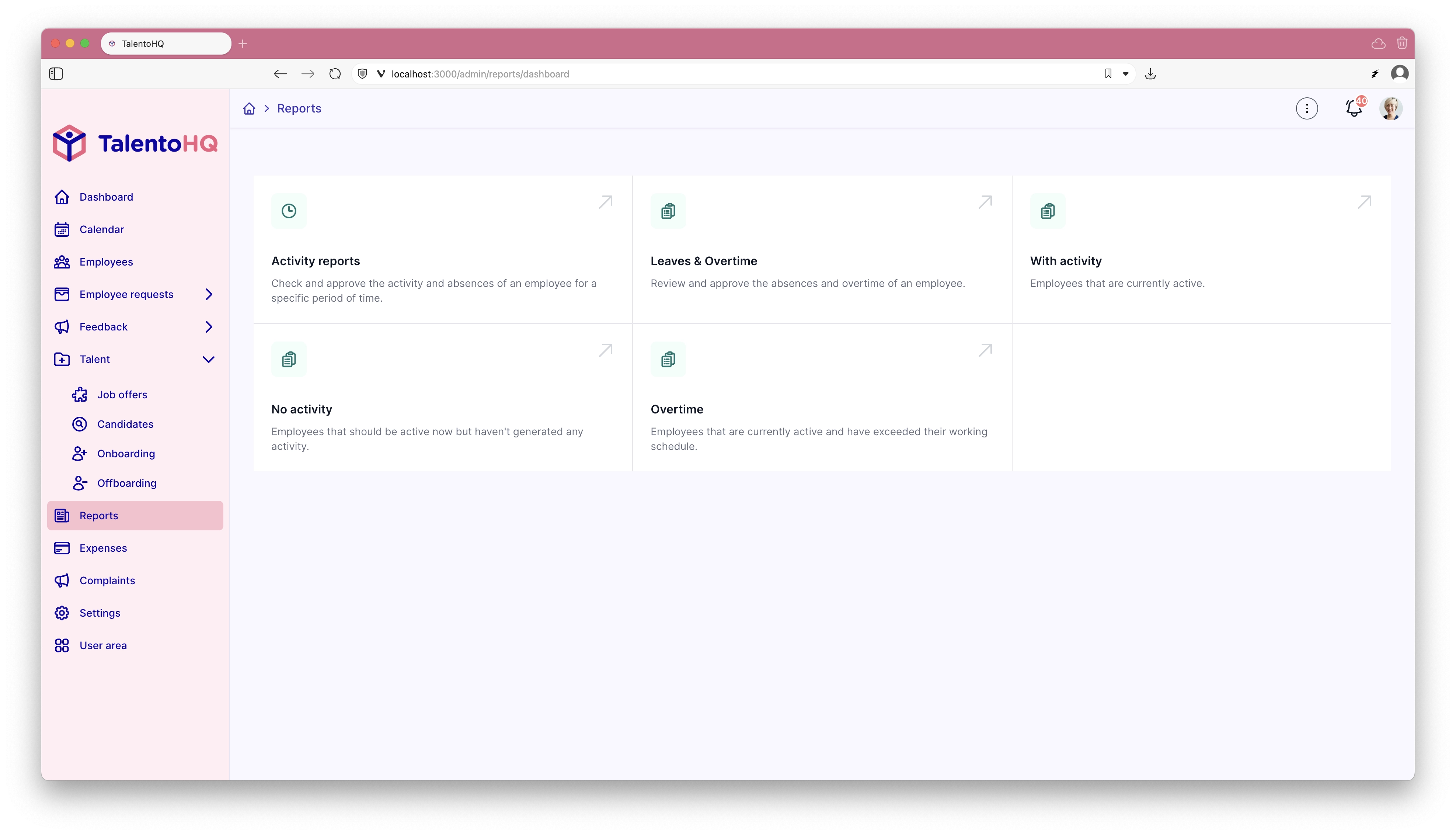
How TalentoHQ supports working-time planning
TalentoHQ connects employee schedules, shifts, daily time entries, absence, and reports. This gives managers a current data set for exploring change instead of relying on an assumed standard week.
Working-time records based on actual entries
Employees can record starts and finishes through enabled methods. Authorized reviewers can examine entries by employee, team, or office and export relevant periods. The records support review; they do not certify compliance automatically.
Shift and schedule management
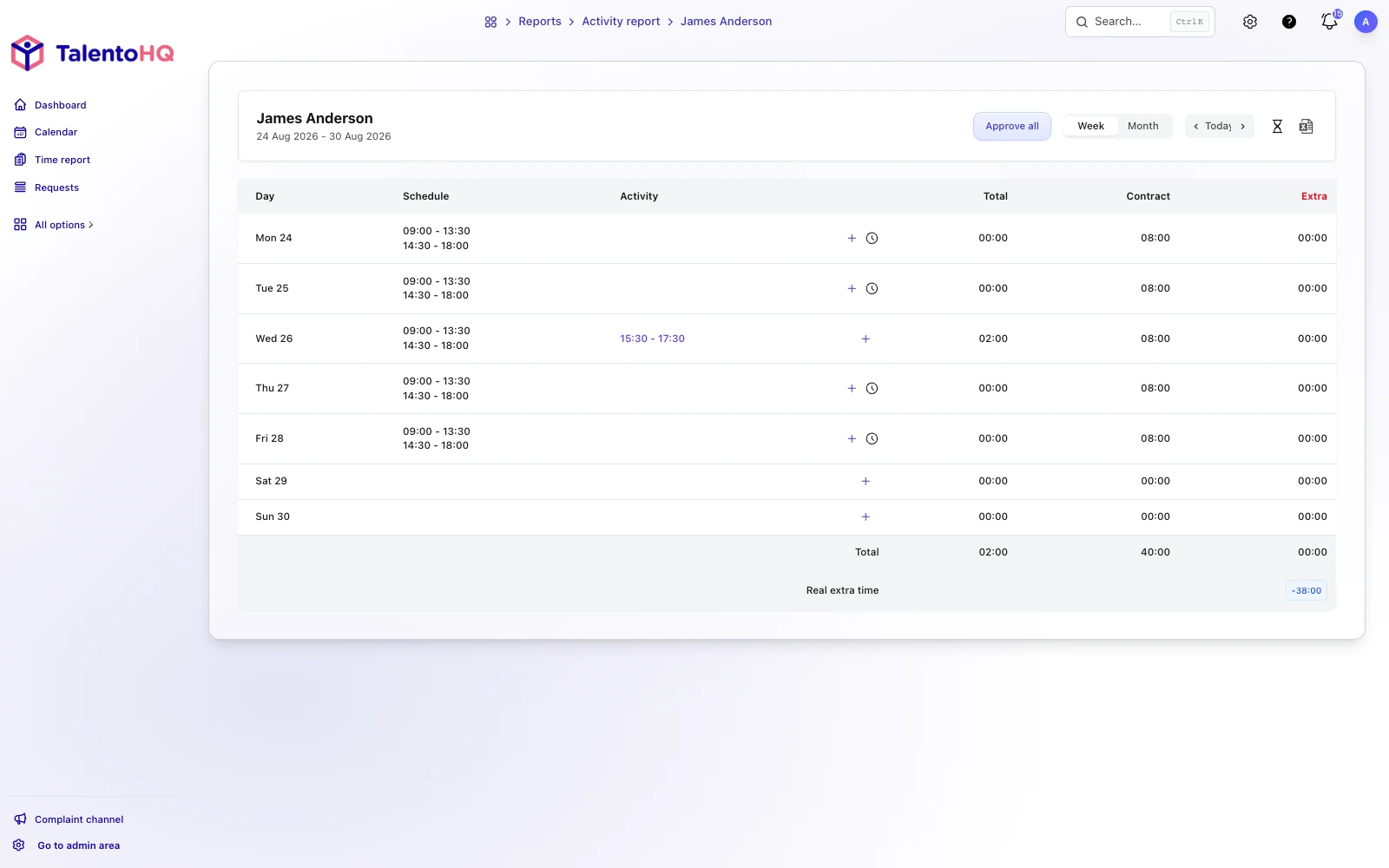
Different schedule types can be assigned by employee, team, or office. If a future law, collective agreement, or company agreement changes hours, schedules can be adjusted centrally rather than recreated in departmental files.
Connected vacation and absence
A schedule scenario should include planned leave and other absence. TalentoHQ can bring requests, calendars, and available balances into that planning. The effect on entitlements must be confirmed under the relevant agreement and rules.
Reports for decisions
Working-time, absence, overtime, and schedule information can be reviewed with management or a labor adviser. Reports help quantify a scenario; they do not decide which interpretation of law or agreement is correct.
Prepare today so future changes remain manageable
The general 37.5-hour reduction described here remained a policy proposal, not an obligation in force, on the source's July 10, 2026 review date. A future version could change, pass, or again fail to obtain parliamentary support. Planning must keep those scenarios separate from current law and the company's applicable collective agreement.
Knowing recorded hours, hourly costs, and shift coverage is valuable regardless of that outcome. Put the data and review process in order because it improves operations now—not because a rejected bill supposedly requires an immediate change.