Occupational risk prevention training must address the risks of the position and arrive at the right time. Assigning the same course to the whole workforce once a year, or retaining a certificate without reviewing the need it covers, leaves gaps in prevention.
The cycle connects risks, content, sessions, and results. TalentoHQ organizes that follow-up while keeping two facts separate: a configured course and completed training.
Prevention training starts with the real position
Article 19 of Spain's Law 31/1995 on Occupational Risk Prevention requires each person to receive sufficient and appropriate theoretical and practical training focused on their position or function and adapted as risks change.
This requirement connects training with the assessment. An office team may need content on ergonomics and emergencies. A warehouse adds traffic routes, load handling, and equipment. A technical position may require specific training arising from regulations and procedures.
Timing also matters. Training is reviewed when a person joins, when functions or technologies change, and when risks develop. Periodic renewals can form part of the plan, but they do not replace a review after a real change.
Build an inventory before the calendar
Before scheduling events, build an inventory that connects risks, positions, and learning. For each course, record:
- Prevention need. The risk, procedure, or change that justifies the content.
- Intended participants. The positions, teams, or offices to which it applies.
- Objectives. What each person should know or be able to apply.
- Format. Theory, practical work, and assessment when needed.
- Timing. Hiring, job change, new technology, or periodic review.
- Evidence. Participation, result, and documentation that must be retained.
- Renewal. The period or condition that requires the content to be reviewed.
This inventory reduces duplicate courses and distinguishes prevention training from professional development. Both can appear in the same annual plan, but they serve different purposes.
Plan content, events, and participants
Training content describes what is taught. An event establishes when, where, and with whom it is delivered. Separating them allows one course to be reused across several sessions without copying materials.
A practical plan can follow this order:
- Create or review the content and its objectives.
- Assign required training to the relevant positions.
- Schedule in-person, online, or hybrid events.
- Enroll the people who need to complete the session.
- Record participation and results.
- Review renewals and changes arising from new assessments.
Managers must be able to distinguish “invited,” “participated,” and “completed.” Only recorded participation shows that training was received, and a published course does not demonstrate coverage across the workforce.
How TalentoHQ organizes prevention training
In TalentoHQ, a course can be marked as required for occupational risk management and given a renewal period. Content is organized into topics and lessons. Events are then created with a format, dates, location, and participants.
Required training can also be defined by position. This helps a new hire receive the content associated with their function and supports another review when someone changes positions.
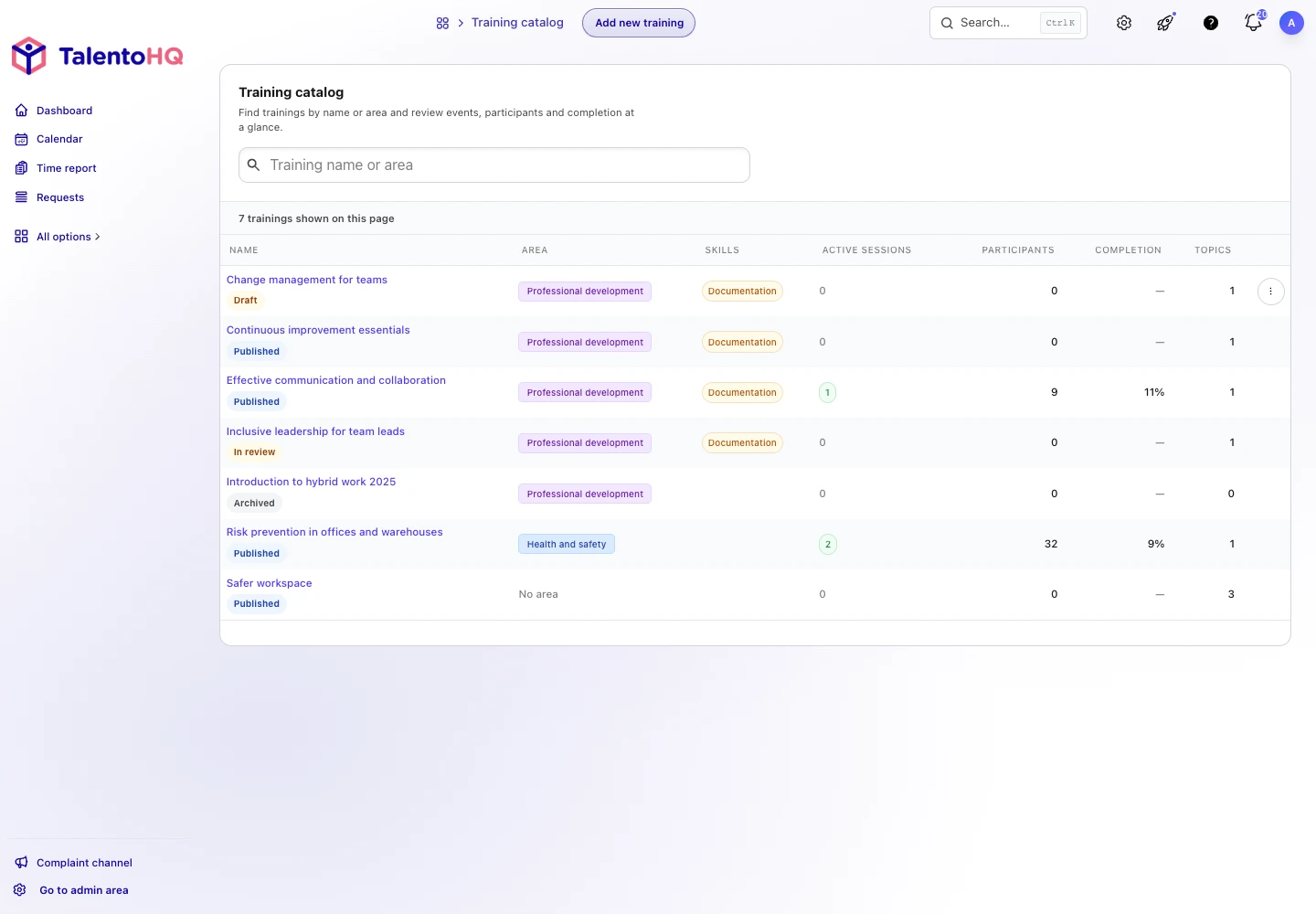
The Training view shows the course status, area, events, participants, and completion percentage. The detail page brings sessions together and preserves the course history.
To review how your inventory of courses and positions would fit, you can request a personalized demo with no commitment.
What “Required training” means on the dashboard
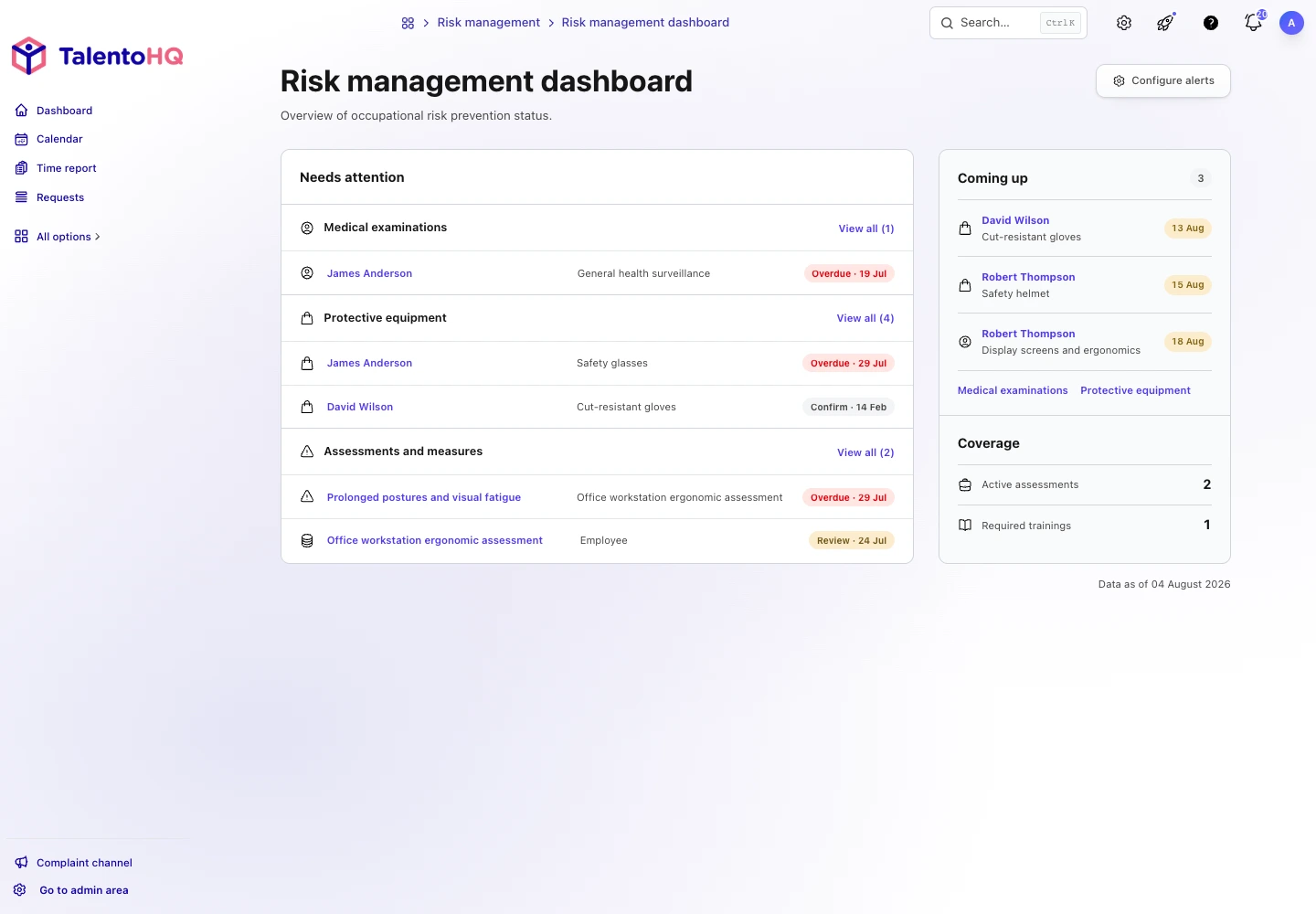
The occupational risk dashboard shows the number of courses marked as required for risk management under Coverage. It is a count of courses configured in the account.
It does not represent the number of people trained, the completion percentage, or validation that the content is sufficient. To check participants and results, open Training and review its events.
This distinction prevents a misleading reading. An account can show several required courses while participants remain incomplete. Another can have one course completed correctly by many people and show only one record.
Connect training, assessments, and measures
Training can arise as a preventive measure after an assessment, but training does not resolve every measure. If design, substitution, collective protection, or work organization can eliminate the risk, training should not shift the entire responsibility to the employee.
When a measure includes training, connect the decisions:
- The assessment identifies the risk and exposed group.
- The measure describes the action and deadline.
- The course defines objectives and content.
- The event brings together the date and participants.
- Follow-up checks completion and application.
- A later review determines whether changes are needed.
The guide to occupational risk assessments and preventive measures explains where this path begins. For general renewal of skills and certificates, read how to organize certificates without relying on manual controls.
Measure more than attendance
Attendance is necessary evidence in many processes, but it does not always demonstrate learning or transfer to the position. Depending on the risk and course, the company can use practical exercises, assessments, observation, or incident reviews.
A useful review asks:
- Did every intended participant take part?
- Did the content correspond to their risks?
- Was understanding or practice verified when needed?
- Are the procedures applied at work?
- Have positions, equipment, or risks changed since the last session?
- Is renewal scheduled against a justified criterion?
The answers can lead to revised content, reinforced practice, or different measures. Training hours matter when they contribute to safer work.
Common mistakes when planning prevention training
- Assigning the same content to the whole workforce. Training must be adapted to position, function, and risks.
- Using a course to compensate for a pending technical measure. Information does not replace eliminating or controlling the risk.
- Confusing publication with completion. Participation and results must be reviewed.
- Renewing by calendar without reviewing changes. New functions or equipment can require earlier training.
- Duplicating content without version control. Keep one clear course with separate sessions.
- Reading the dashboard count as personal coverage. It measures configured courses, not people trained.
An annual calendar that still accounts for real changes
The annual plan provides a shared view of sessions, but it must leave room for new needs. A new machine, process change, or job change can require training before the planned periodic date.
A quarterly review can compare scheduled events, positions with requirements, new hires, organizational changes, and assessment results. This identifies people with no session and content that needs an update.
Availability also needs coordination. Scheduling a course without considering shifts and coverage can reduce participation or transfer work to other teams. The calendar should connect prevention needs with the real organization of work.
Responsibilities for maintaining the plan
The occupational risk prevention service defines or validates the need and technical content. HR can coordinate sessions and records, team managers ensure availability and reinforce application, and each participant contributes questions and evidence of practice.
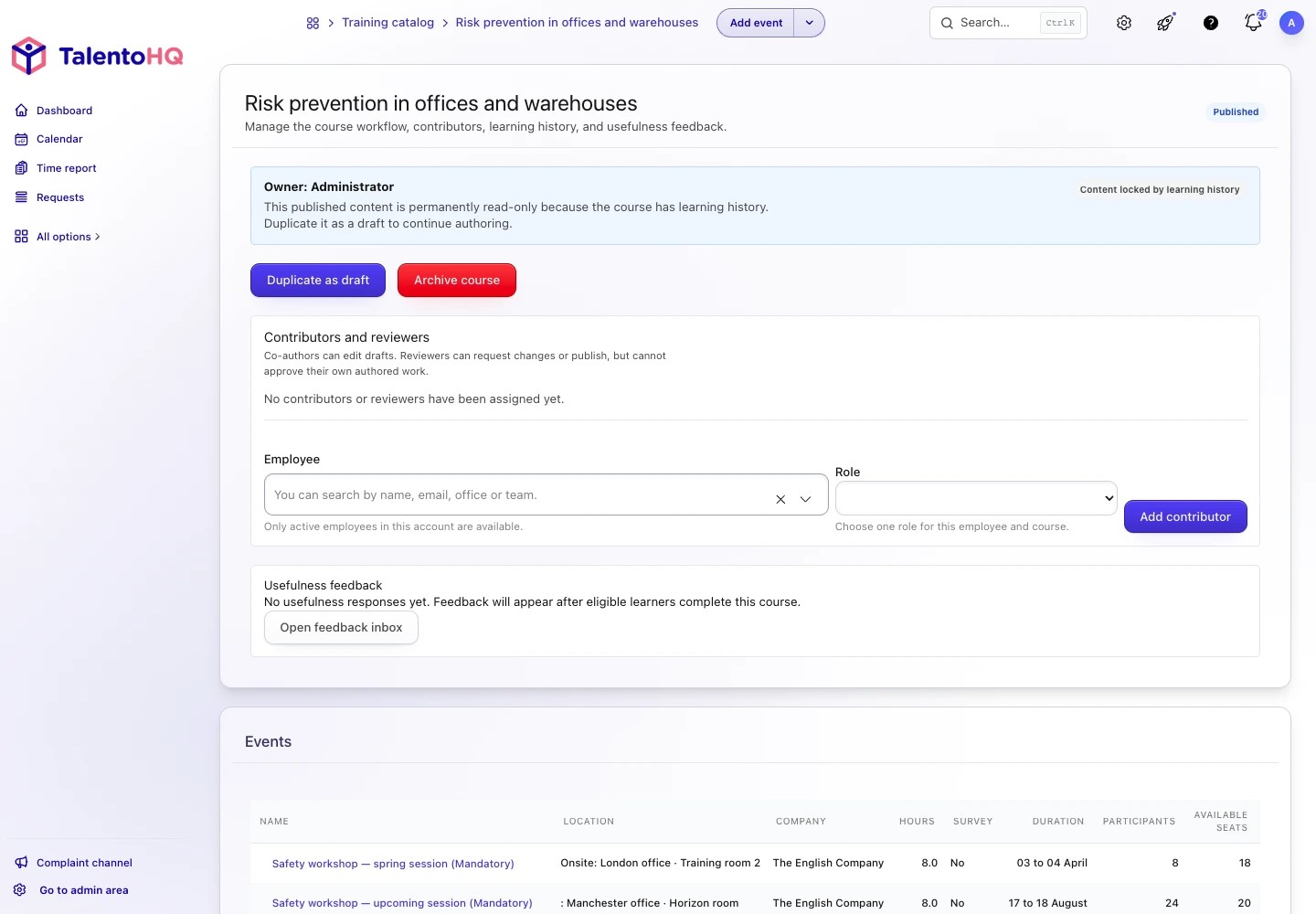
A named course owner should control versions. When published content has a history, TalentoHQ makes it read-only and allows it to be duplicated as a draft for changes. This preserves what an earlier group received and prevents retrospective changes to evidence.
Before publishing the new version, record what changed, why, and who it affects. Then schedule the necessary sessions without assuming that completion of the old version automatically covers the new risk or procedure.
Frequently asked questions about prevention training
Must all prevention training be repeated annually?
There is no universal frequency for every kind of content. The need depends on risks, specific regulations, changes, results, and professional prevention criteria. The configured renewal should reflect a justified decision.
Is an online course always sufficient?
No. Spanish law requires sufficient and appropriate theoretical and practical training for the position. Some risks require a demonstration, in-person practice, or a specific assessment. The need determines the format.
What does marking a course as required mean?
It identifies the course within occupational risk management and includes it in the dashboard's Coverage count. It does not automatically enroll the entire workforce or prove that participants completed it.
How is completion checked?
Review the events and participants in Training. The available information includes enrollment, attendance, progress, or results, depending on the configured process.
What happens after a job change?
Review the requirements of the new position and the training already completed. The change can require new content before the person takes on certain tasks.
Does training automatically close a measure?
No. The preventive measure retains its own follow-up. When the training is complete, the owner must check the full action and update the measure when appropriate.
Conclusion: connect training with people, results, and job changes
Occupational risk prevention training starts with the assessment, adapts to the position, and is reviewed beyond attendance. TalentoHQ organizes content, events, participants, and renewals, and connects the required-training inventory with the prevention dashboard.
At every review, check who needed to participate, what result they achieved, and what has changed since the previous session. The guide to occupational risk alerts and deadlines helps interpret the dashboard, while the main occupational risk management guide for Spanish SMEs places training alongside medical examinations, PPE, assessments, and measures.