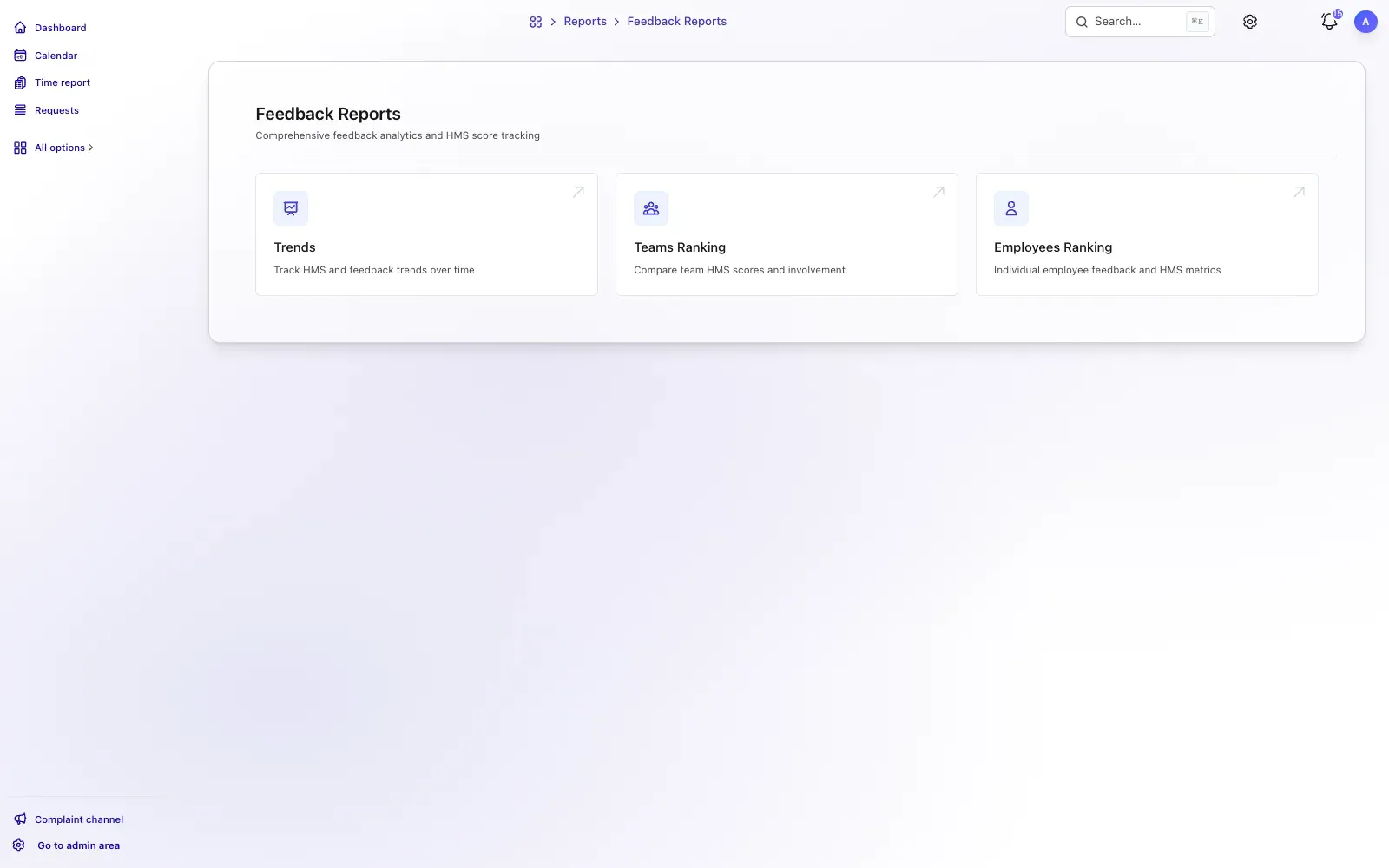
Configure the survey and decide how results will be reviewed
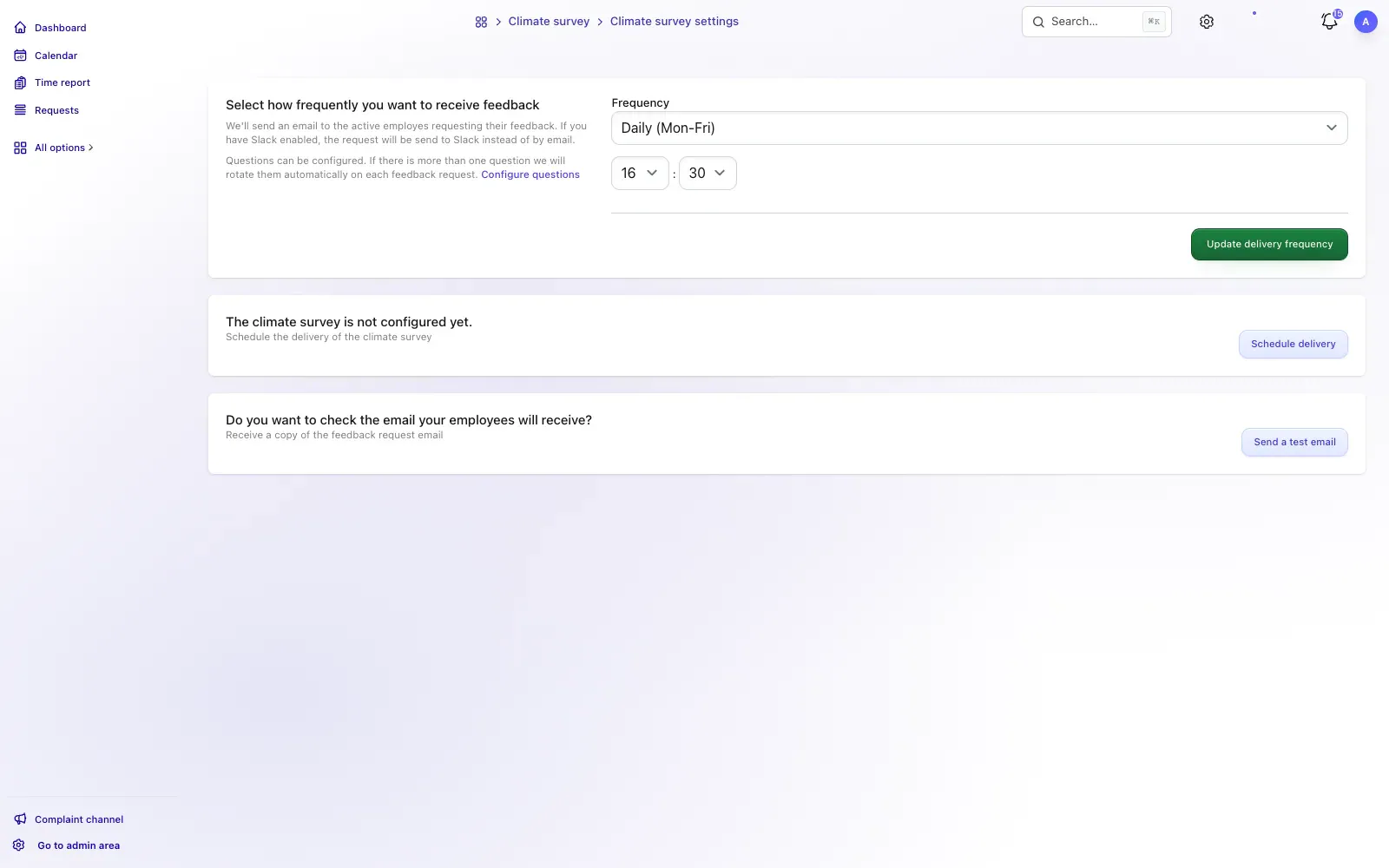
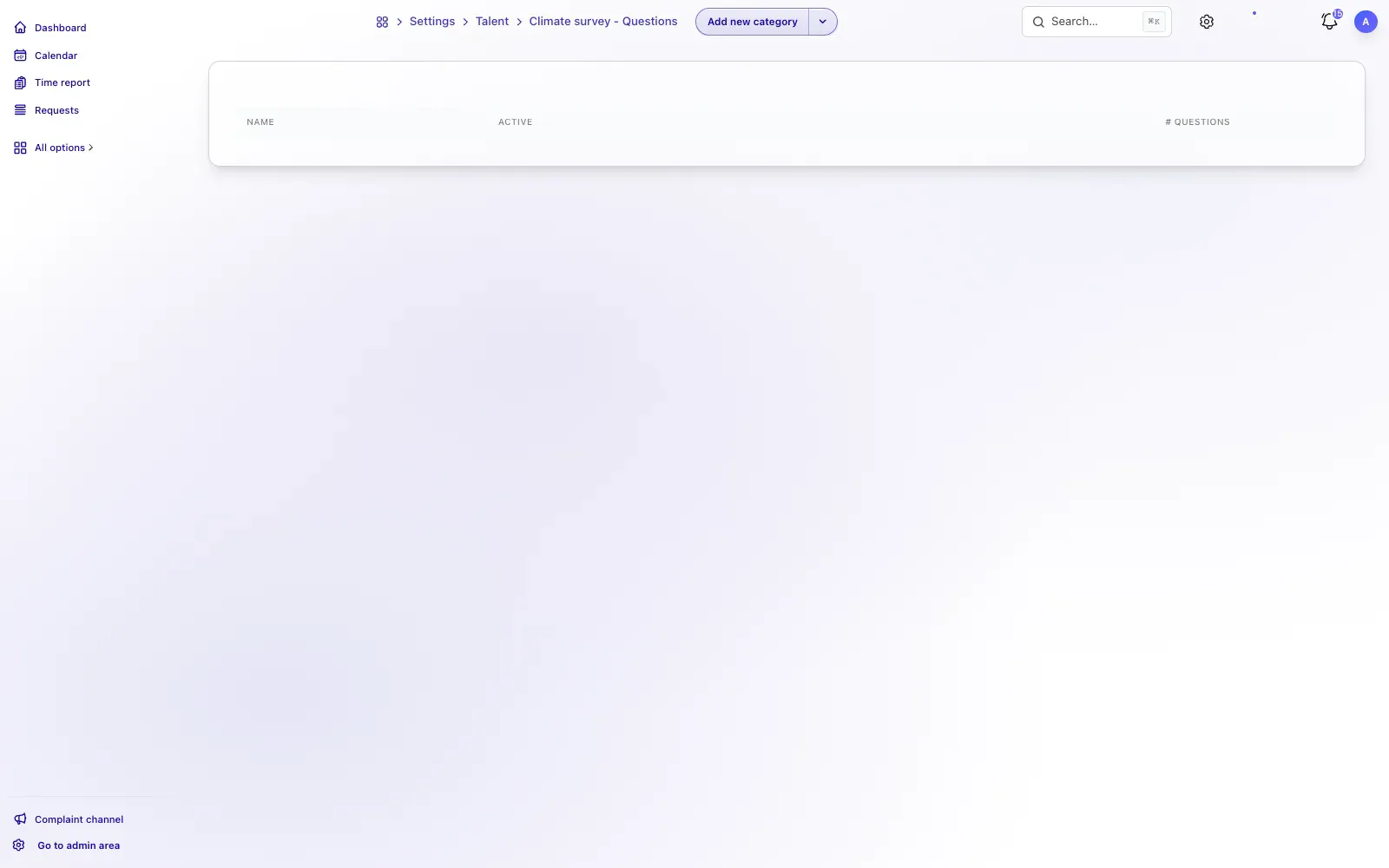
In TalentoHQ you can create categories and questions, choose between anonymous and identified responses, and schedule a survey's frequency. Before sending it, decide who will see the results and which groups are large enough to prevent a response from indirectly identifying an individual.
Happy Mood Score summarizes how responses change over time, but it does not explain why the workplace climate has changed. If a score falls, the manager needs to read the available context, speak with the team and record actions that can be reviewed in the next round.
A survey becomes useful when it leads to a verifiable decision. For example, a team reports that shift changes arrive with too little notice; the company agrees on a notice period, assigns an owner and asks about it again in the next survey. Without that follow-up, the dashboard merely accumulates responses.
Create workplace climate surveys
TalentoHQ lets you create your own surveys, organize questions into categories and include as many questions as the review requires. Surveys can be anonymous or identified, and each one can use a frequency suited to its purpose.
Alongside custom surveys, the platform includes HMS, TalentoHQ's Happy Mood Score approach, developed over the past 12 years.
An example workplace climate survey
The following categories and questions can be adapted to the company. Match the survey's length and frequency to the information needed and the time employees have to respond. Happy Mood Score can provide shorter, more frequent measurements between broader surveys.
1. Communication
How would you rate communication between departments?
Effective communication supports collaboration and dependable hand-offs.Is important information shared clearly and at the right time?
Clarity and timeliness help people make decisions using the same context.Do you feel able to share opinions and ideas with your manager?
People need a respectful route for raising ideas and concerns.
2. Leadership
Does your manager provide the support you need to do your work?
Useful leadership includes direction, context and access to resources.Do you believe decisions are made fairly and consistently?
Consistent decisions support confidence in everyday management.Does your manager recognize and value your contribution?
Specific recognition helps employees understand how their work supports the team.
3. Teamwork
How would you rate collaboration within your team?
Collaboration depends on clear roles, information and mutual support.Do colleagues treat one another with respect and provide support when needed?
A respectful environment makes dependable cooperation possible.Are the team's objectives clear and well defined?
Clear objectives help people coordinate priorities and decisions.
4. Work environment
Do you feel comfortable and safe in your workplace?
Safety and appropriate working conditions are fundamental.Are the facilities and resources suitable for your work?
People need the right equipment and environment to carry out their responsibilities.Does your working pattern support a sustainable balance between work and personal life?
The answer can identify scheduling or workload practices that need review.
5. Professional development
Do you have opportunities to learn and develop within the company?
Development opportunities should be visible and connected to the employee's role.Does the company provide the training and tools needed to strengthen your skills?
Practical support turns development plans into achievable work.Does your role make good use of your skills and experience?
The answer can inform assignments, training and development conversations.